
15 Best Things to Do in Montenegro in Summer
Summer has a way of revealing Montenegro at its very best. Long, sun-filled days invite slow mornings by the Adriatic, afternoons spent high in the mountains, and evenings that stretch into golden sunsets over medieval towns and quiet bays. Few places in Europe offer such a striking contrast within such short distances, making it possible to experience the coastline, national parks, historic landmarks, and local traditions all in a single trip.
If you're planning a summer in Montenegro, deciding where to begin can be surprisingly difficult. Beyond the well-known beaches, the country is filled with scenic drives, boat trips, mountain trails, centuries-old towns, and experiences that bring you closer to its culture and landscapes. Some are iconic for good reason, while others are often overlooked by first-time visitors.
This guide brings together the best things to do in Montenegro in summer, from sailing across the Bay of Kotor and riding the Kotor Cable Car to exploring national parks, discovering historic towns, and tasting local wines. Whether you're drawn to nature, adventure, cultural heritage, or a slower pace by the sea, these experiences will help you make the most of your time and see a side of Montenegro that stays with you long after the journey ends.
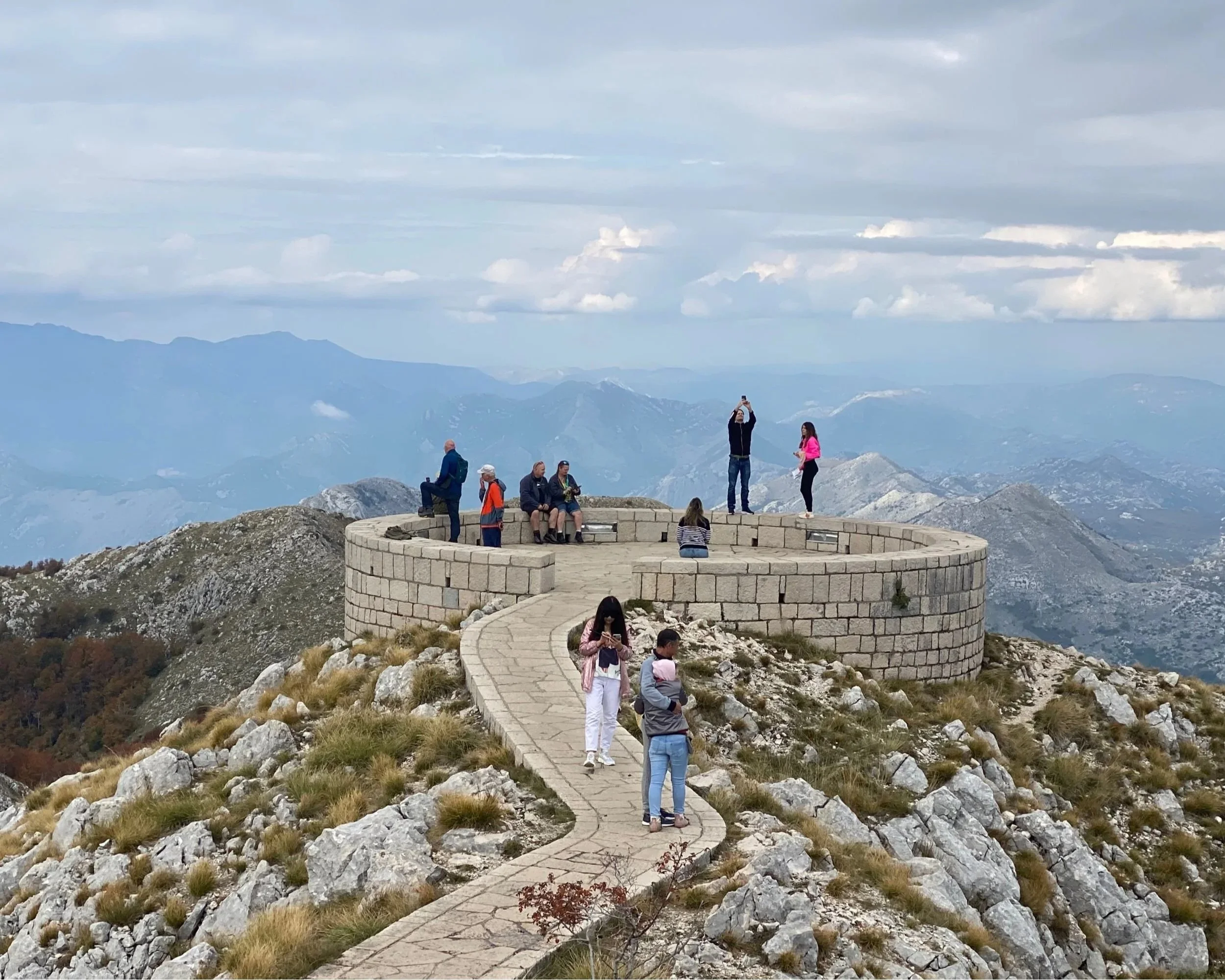
Tourists taking photos of the view from Mount Lovćen in Montenegro.
1. Ride the Kotor Cable Car
Why It's Worth Visiting
Few experiences change your perspective of Montenegro quite like the Kotor Cable Car. In just eleven minutes, the journey climbs from the Adriatic coast to the slopes of Mount Lovćen, rising from Dub to over 1,300 metres above sea level. As the cabins glide higher, the Bay of Kotor slowly unfolds beneath you, unveiling a patchwork of medieval towns, sleepy villages, and winding roads that hug the shoreline.
What makes this experience unforgettable isn't only the view, it's the contrast. One moment you're surrounded by the energy of the coast, and minutes later you're breathing cooler mountain air with the entire bay spread out below. On a clear summer day, the visibility stretches far beyond the bay itself, making it one of the most rewarding panoramic viewpoints in Montenegro.
What to Do at the Top
Reaching the upper station is only the beginning. The Lovćen plateau invites you to slow down and spend a few hours enjoying the surroundings rather than simply taking a photo and heading back down. Scenic walking paths lead to viewpoints overlooking the coastline, while cafés and restaurants provide a relaxed setting to enjoy lunch or a coffee with one of the country's most impressive backdrops.
For visitors looking for something more active, the Alpine Coaster adds a playful twist to the mountain experience, weaving through the terrain with sweeping views of the bay. The cable car station also serves as an excellent starting point for exploring Lovćen National Park, whether you're planning to visit the Njegoš Mausoleum, discover forest trails, or continue deeper into one of Montenegro's most celebrated mountain landscapes.
Best Time to Visit
Early mornings bring the calmest atmosphere, softer light, and some of the clearest views across the Bay of Kotor before the summer heat settles over the coast. It's an ideal time for photography, especially if you prefer quieter viewpoints.
Late afternoon is equally rewarding. As the sun begins to drop, the mountains cast long shadows across the bay and the water takes on deeper shades of blue and gold. If your itinerary allows, plan enough time to stay until sunset before descending back to Kotor. Watching the coastline change colours from above is one of those moments that tends to stay with travellers long after they leave Montenegro.
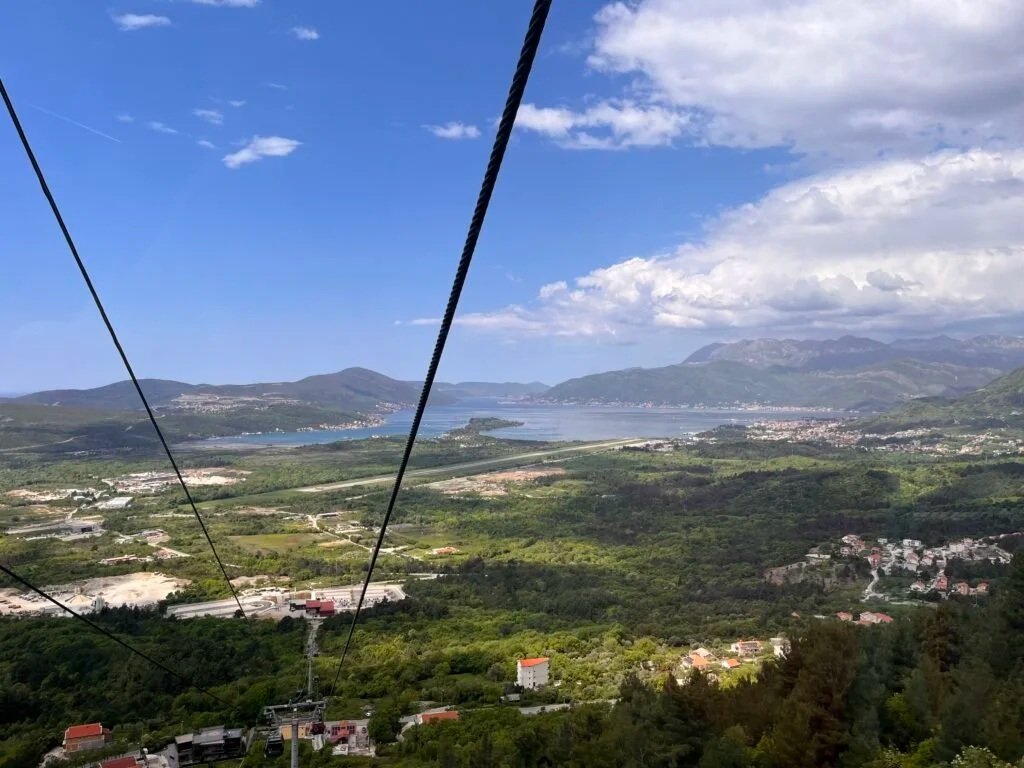
View of the Bay of Kotor from the cable car in Montenegro.
Foto:pots+planes
2. Take a Boat Tour in Kotor Bay
Why It’s Worth Doing
Leaving the marina behind, the Bay of Kotor gradually opens into the Adriatic, and the scenery begins to change. Stone villages give way to rugged cliffs, secluded coves, and stretches of coastline that can only be reached by sea. It’s a journey that feels just as rewarding as the destinations themselves.
A boat tour is one of the best ways to see this part of Montenegro, since so much of what makes the bay special, hidden coves, sea caves, island churches, and abandoned tunnels, simply isn’t visible from the road.
What You’ll See
A typical Kotor Bay tour combines several highlights in a single outing. Our Lady of the Rocks, the small man-made island off Perast, is usually one of the first stops, followed by a look at the former submarine tunnels carved into the cliffs during the Yugoslav era and a pass by Mamula Island, a fortified islet with a fascinating history at the entrance to the bay.
Many tours also include the Blue Cave on the Luštica Peninsula, where sunlight filtering through an underwater opening turns the water an almost luminous shade of blue, one of the most photographed natural attractions on Montenegro’s coast. Depending on the route, there’s often time for a stop in Perast itself, or a swim break at a quieter cove along the way.
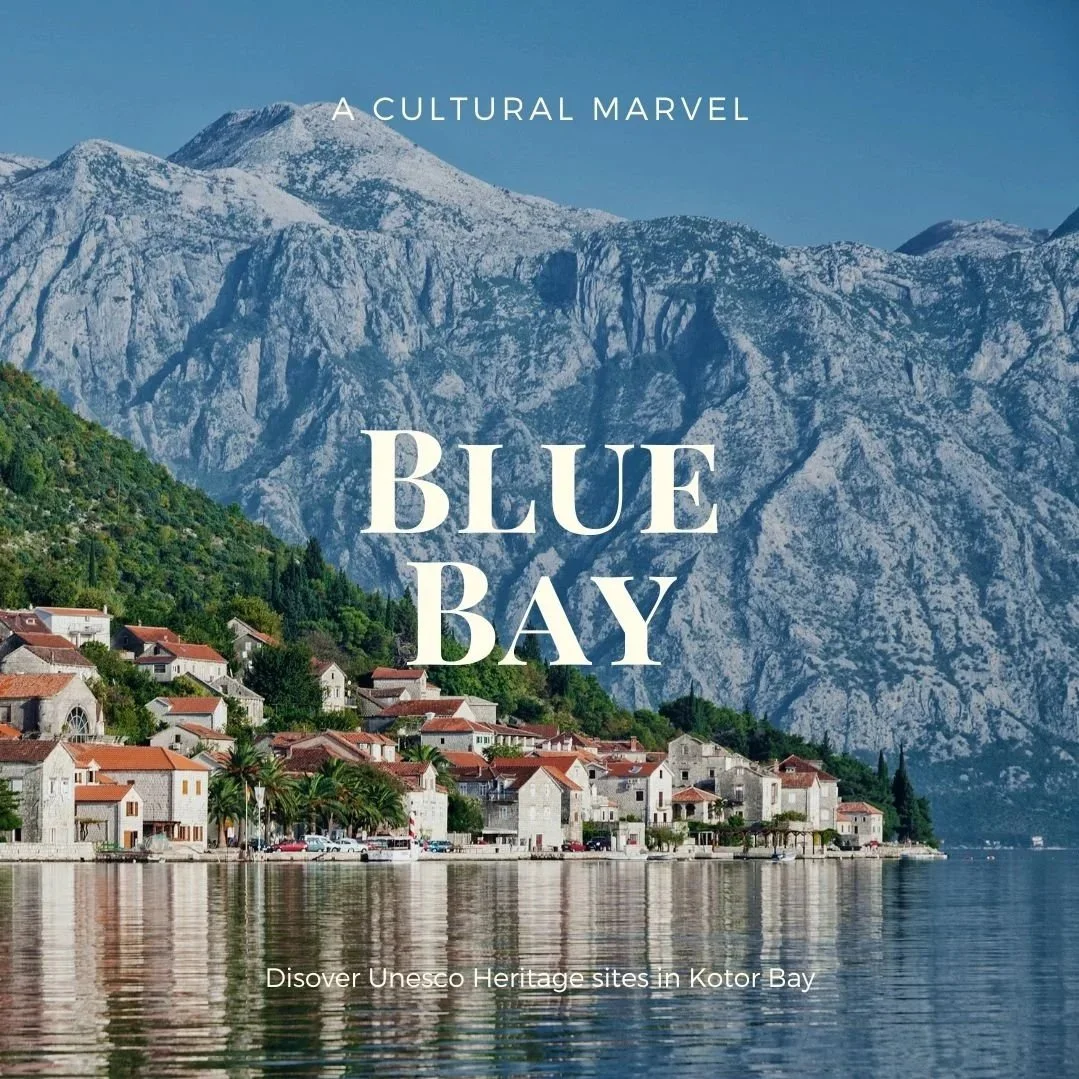
Kotor Old Town and Perast with a boat ride to Our Lady of the Rocks.
Swimming & Hidden Coves
Stepping into the water is what transforms a boat trip from sightseeing into something far more immersive. The sea around the Blue Cave is remarkably clear, and swimming beneath the towering rock walls offers a completely different perspective than simply viewing it from the deck.
Beyond the cave, many routes pause in smaller bays and secluded coves scattered along the Luštica coastline. Some are tucked between steep cliffs, while others hide small pebble beaches that remain inaccessible by road, the kind of peaceful stops that often become the highlight of the day.
Choosing Your Boat
The right boat depends on the pace and style you’re after. A speedboat is the fastest way to cover the bay and reach the Blue Cave, ideal if you want more time in the water and less time travelling. A powerboat offers a bit more space and comfort for families or small groups, while a yacht charter suits travellers who’d rather take the day slowly, with room to relax on board between stops.
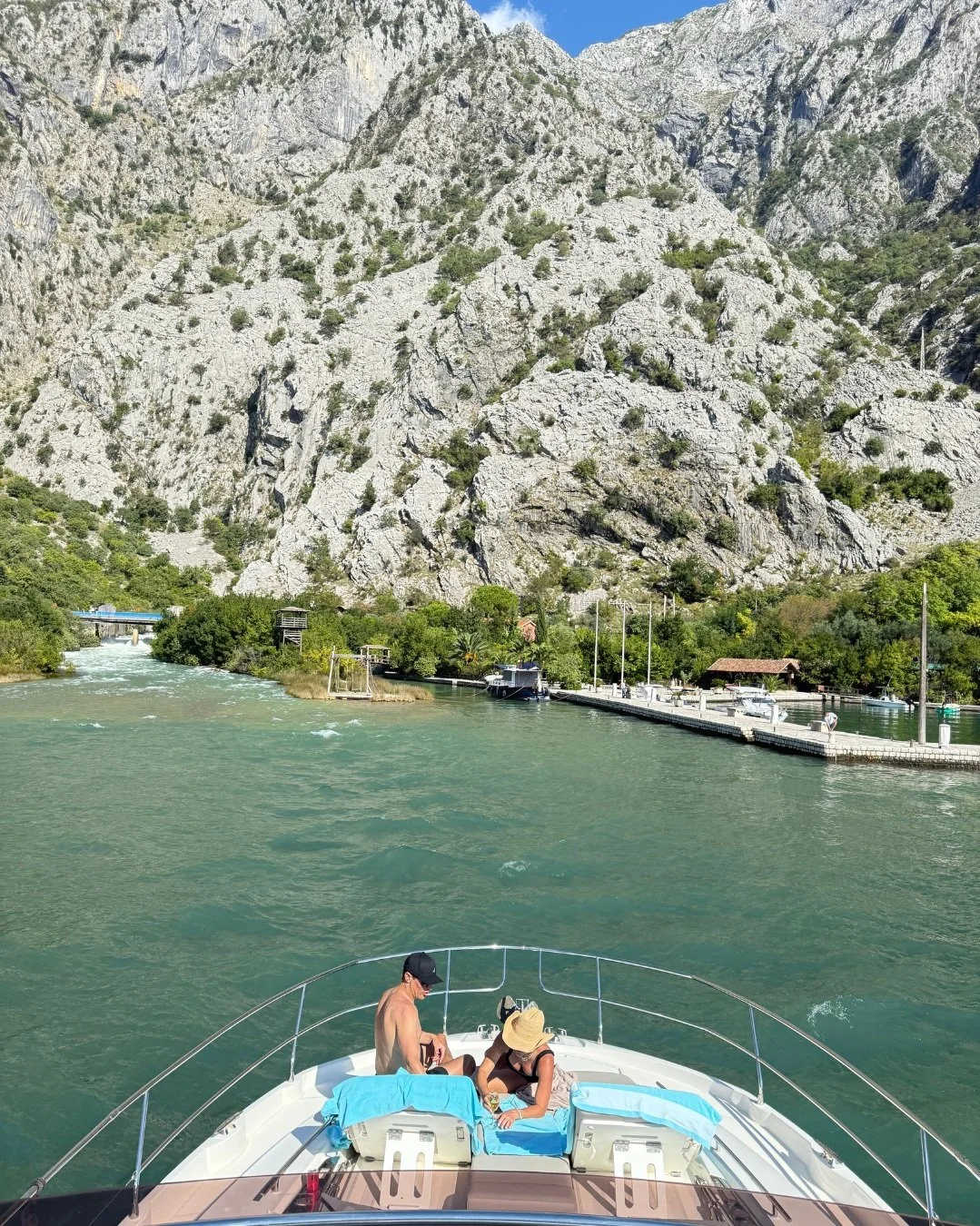
A boat cruising through the Bay of Kotor in Montenegro.
3. Visit Perast & Our Lady of the Rocks
Why Perast Is Special
Perast moves at a different pace. Unlike the livelier towns along Montenegro's coast, there are no busy beaches or crowded shopping streets here. Instead, you'll find a waterfront lined with elegant stone palaces, baroque churches, and low-key cafés where the rhythm of the bay sets the tone for the day.
Despite its small size, Perast has a remarkable maritime history. During the Venetian period, wealthy sea captains built many of the grand residences that still define the town today, giving it a character that feels refined without being extravagant. Walking along the promenade, it's easy to imagine the centuries of seafaring tradition that shaped this corner of the Bay of Kotor.
Visit Our Lady of the Rocks
Just a short boat ride from the shore lies Our Lady of the Rocks, one of Montenegro's most distinctive landmarks. Unlike the surrounding natural islands, this small islet was created by local sailors who, according to tradition, placed stones into the sea after finding an icon of the Virgin Mary on a nearby reef. Over generations, the island gradually took shape and eventually became home to the church that stands there today.
Inside, the church holds a collection of paintings, silver votive plaques, and embroidered works that reflect centuries of local devotion and maritime heritage. The museum offers another glimpse into the stories that connect Perast with the sea, making the visit about far more than the island's postcard-worthy setting.
Best Things to Do in Perast
Although many travellers stop in Perast for an hour or two, the town rewards those who linger a little longer. A slow walk along the waterfront reveals small details that are easy to miss when you're rushing between attractions: ornate stone doorways, hidden courtyards, and uninterrupted views across the bay towards the surrounding mountains.
Finding a table beside the water is equally worthwhile, especially over a leisurely lunch featuring fresh seafood or local specialities. As boats drift across the bay and church bells echo through the town, Perast reveals the quieter side of summer in Montenegro. It isn't a place filled with endless attractions; its appeal lies in its atmosphere, its history, and the simple pleasure of taking your time.
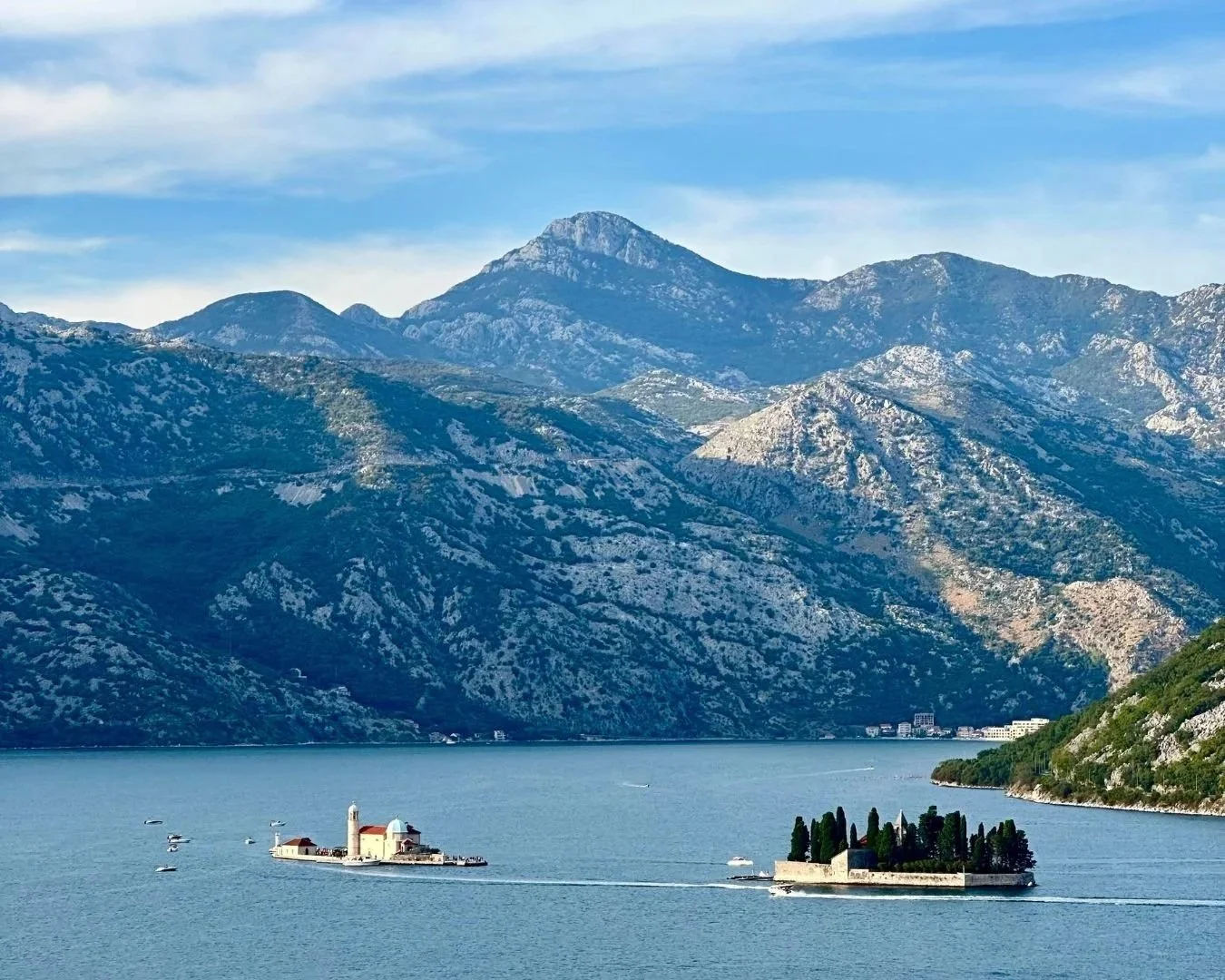
Our Lady of the Rocks, a small island church in the Bay of Kotor, Montenegro.
4. Relax on Montenegro's Most Beautiful Beaches
Best Beaches to Visit
No two beaches in Montenegro feel quite the same. Some are tucked beneath dramatic cliffs, others stretch for kilometres along the southern coast, while a few sit just a short walk from lively old towns. That variety is part of what makes spending time by the sea here so rewarding, you can choose a different setting every day without travelling far.
Mogren Beach, connected by a scenic coastal path from Budva's Old Town, is one of the country's best-known swimming spots thanks to its clear water and sheltered location. A little farther along the coast, Jaz Beach offers a wider shoreline with plenty of space, making it a popular choice for families and visitors looking to spend an entire day by the sea. If you're heading south, Velika Plaža near Ulcinj feels completely different, with its long sandy coastline, shallow water, and steady breeze that attracts kitesurfers throughout the summer.
Hidden Beach Gems
Some of the most rewarding places along Montenegro's coastline aren't marked by large signs or lined with beach clubs. They are the smaller coves where the soundtrack is little more than gentle waves meeting the shore.
Drobni Pijesak, set below the coastal road between Budva and Petrovac, is one such place. Framed by green hills and turquoise water, it offers a calmer alternative to the region's busier beaches. Not far away, Lučice Beach near Petrovac combines crystal-clear water with the shade of pine trees that reach almost to the shoreline, creating a setting that feels relaxed even during the height of summer.
Many of these beaches are best reached by car or boat, and arriving early in the morning often rewards you with a calm stretch of coastline before the day begins to fill with visitors.
Tips for a Perfect Beach Day
A little planning goes a long way, especially during the busiest weeks of the season. Setting out early not only makes parking easier but also gives you the chance to enjoy the sea before temperatures peak in the afternoon.
Water shoes can be useful on Montenegro's pebble beaches, while plenty of sunscreen, drinking water, and a light cover-up will make long hours by the coast far more comfortable. If you're hoping to explore more than one beach in a single day, consider following the coastline between Budva, Sveti Stefan, and Petrovac. The drive itself is part of the experience, with viewpoints and small bays appearing around almost every bend.
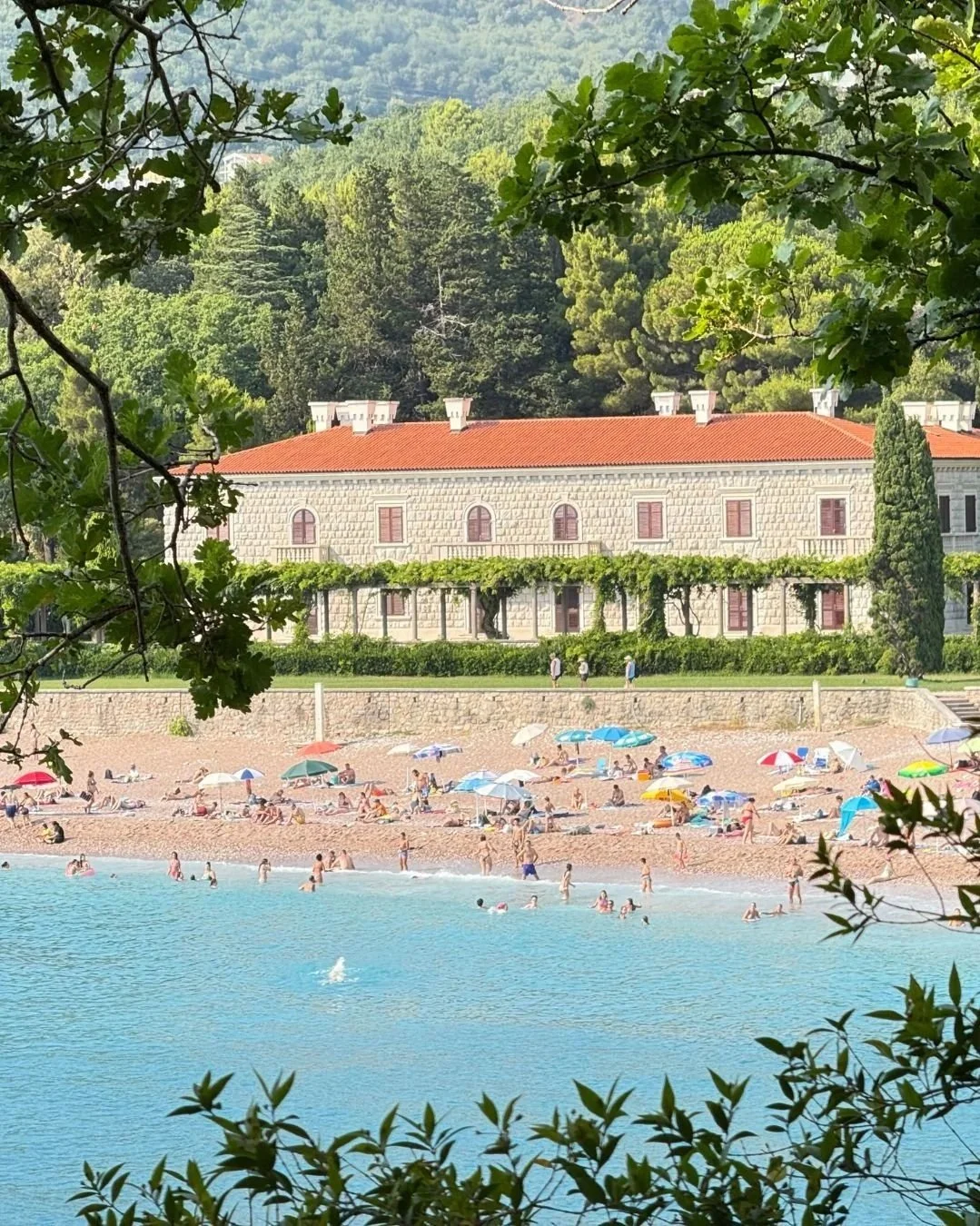
King’s Beach in Montenegro
5. Explore Kotor Old Town
Must-See Landmarks
Walking through Kotor Old Town feels like stepping into a place where centuries of history are still part of everyday life. Behind the stone walls surrounding the city, narrow streets open into peaceful squares, small churches, elegant palaces, and hidden corners that reveal a different story with every turn.
Recognised as a UNESCO World Heritage Site, Kotor is one of the best-preserved medieval towns on the Adriatic. Its architecture reflects the many cultures that shaped the region, from Venetian influence seen in its stone buildings and ornate details to centuries-old religious landmarks that stand throughout the old centre.
A slow walk through the town should include St. Tryphon’s Cathedral, one of Montenegro’s most important religious monuments, as well as the Maritime Museum, which tells the story of Kotor’s deep connection with sailing and trade. The Square of Arms, the Clock Tower, and the tucked-away passages leading away from the main streets are equally worth discovering, especially when explored without a fixed schedule.
Climb the City Walls
Above the rooftops of Kotor rises one of Montenegro’s most impressive historic walks, the ancient city walls leading towards the Fortress of San Giovanni. Built along the steep slopes of Mount Lovćen, these fortifications protected the town for centuries and now offer one of the most striking viewpoints on the coast.
The climb involves hundreds of steps, but the reward changes with every level. Looking back, the terracotta rooftops of Kotor gradually become smaller while the entire bay opens beneath you, exposing the sweeping scenery that has made this region famous. The contrast between the deep blue water, dramatic mountains, and medieval architecture creates a view that feels almost timeless.
The best moments to make the ascent are early in the morning or later in the afternoon, when the temperatures are more comfortable and the light creates a softer mood. Bringing water and taking your time is essential, the experience is not about reaching the top quickly, but about enjoying the journey along the way.
Where to Eat & Relax
After exploring the stone lanes and historic landmarks, Kotor invites you to slow down and enjoy its slower moments. Hidden courtyards, small wine bars, and restaurants tucked between centuries-old buildings provide the perfect setting for a relaxed break.
The town’s culinary scene reflects its coastal location, with menus often featuring fresh seafood, locally produced olive oil, Mediterranean flavours, and traditional Montenegrin dishes. Sitting outside on a small square with a glass of local wine or enjoying dinner beneath the old stone walls is part of the charm of spending time in Kotor.
For a more peaceful experience, step away from the busiest streets and explore the smaller passages where locals still gather in the evening. As the day visitors leave and the lights begin to appear across the bay, Kotor shows another side of itself, calmer, more intimate, and perhaps even more memorable.
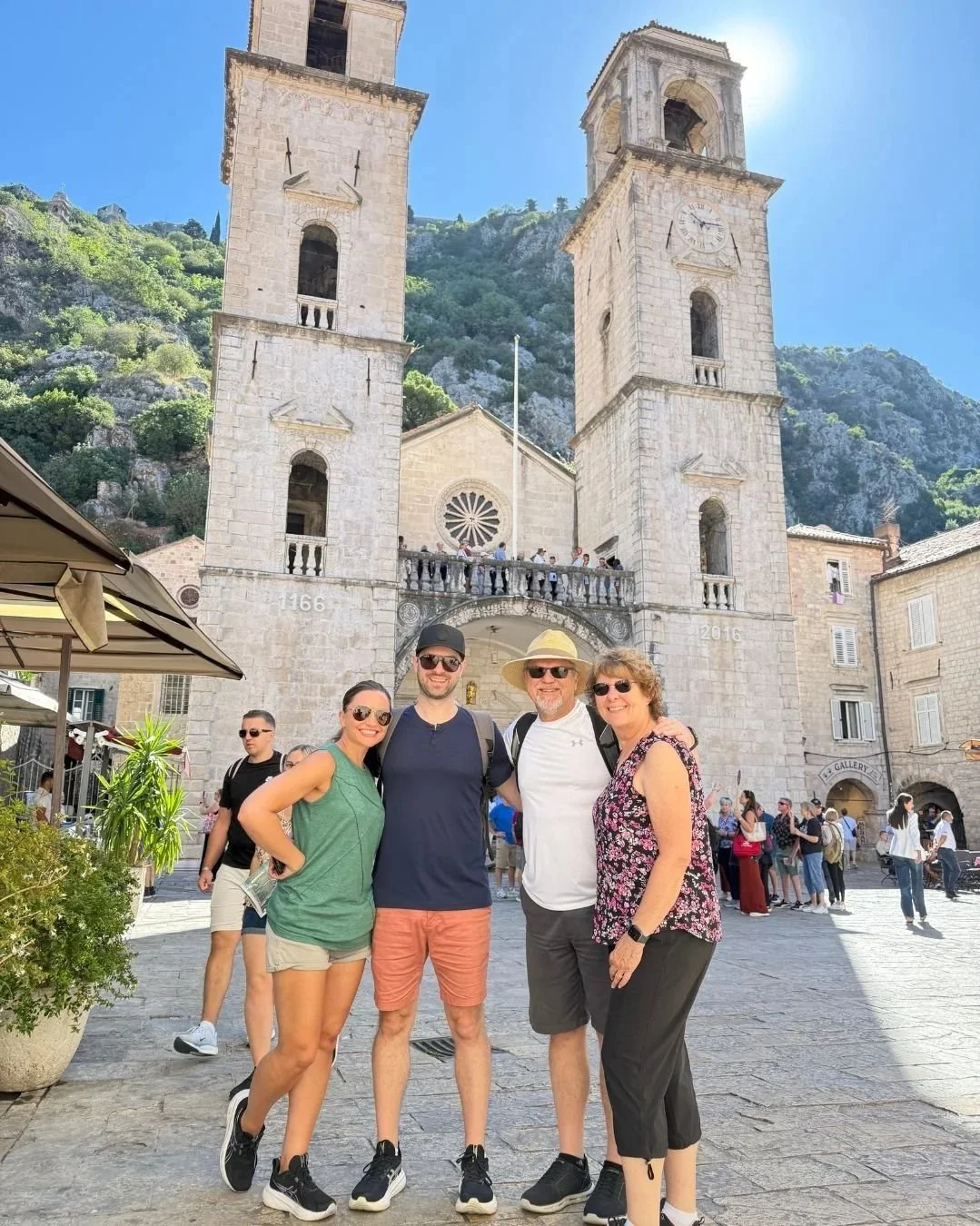
Our guests in front of St. Tryphon’s Cathedral in Kotor, Montenegro.
6. Visit Lovćen National Park & Njegoš Mausoleum
Why Lovćen Is a Must-Visit
Rising above the coastal towns and winding roads of Montenegro, Lovćen National Park offers a completely different perspective of the country. After spending time along the Adriatic, arriving on Lovćen feels like entering another world, one shaped by mountain air, dense forests, open viewpoints, and a deep connection to Montenegro’s history and identity.
The mountain holds a special place in the heart of the country. Often described as a symbol of Montenegro, Lovćen has long been connected with national traditions, particularly through Petar II Petrović-Njegoš, one of Montenegro’s most important historical figures, whose legacy is closely tied to this region.
Beyond its cultural significance, Lovćen is a place to slow down and reconnect with nature. The park’s landscapes change as you climb higher, moving from Mediterranean vegetation near the coast to rocky mountain terrain and peaceful forest paths. On clear summer days, the views stretch across the Bay of Kotor, the Adriatic Sea, and the rugged peaks of Montenegro’s interior.
Climb to the Mausoleum
At the summit of Jezerski Vrh stands the Njegoš Mausoleum, one of Montenegro’s most remarkable monuments. Built in honour of Petar II Petrović-Njegoš, the mausoleum combines architecture, history, and landscape into one unforgettable experience.
Reaching the monument requires climbing 461 steps through a stone passage leading to the top of the mountain. The ascent itself becomes part of the experience, gradually opening up wider views with every step. Inside, the simple yet powerful design reflects Njegoš’s importance, while the viewing platform outside offers one of the most impressive panoramas in the country.
From this height, Montenegro appears in its full diversity, mountains, coastline, and distant horizons meeting in one vast panorama. It is one of those rare places where the destination itself feels like part of the story.
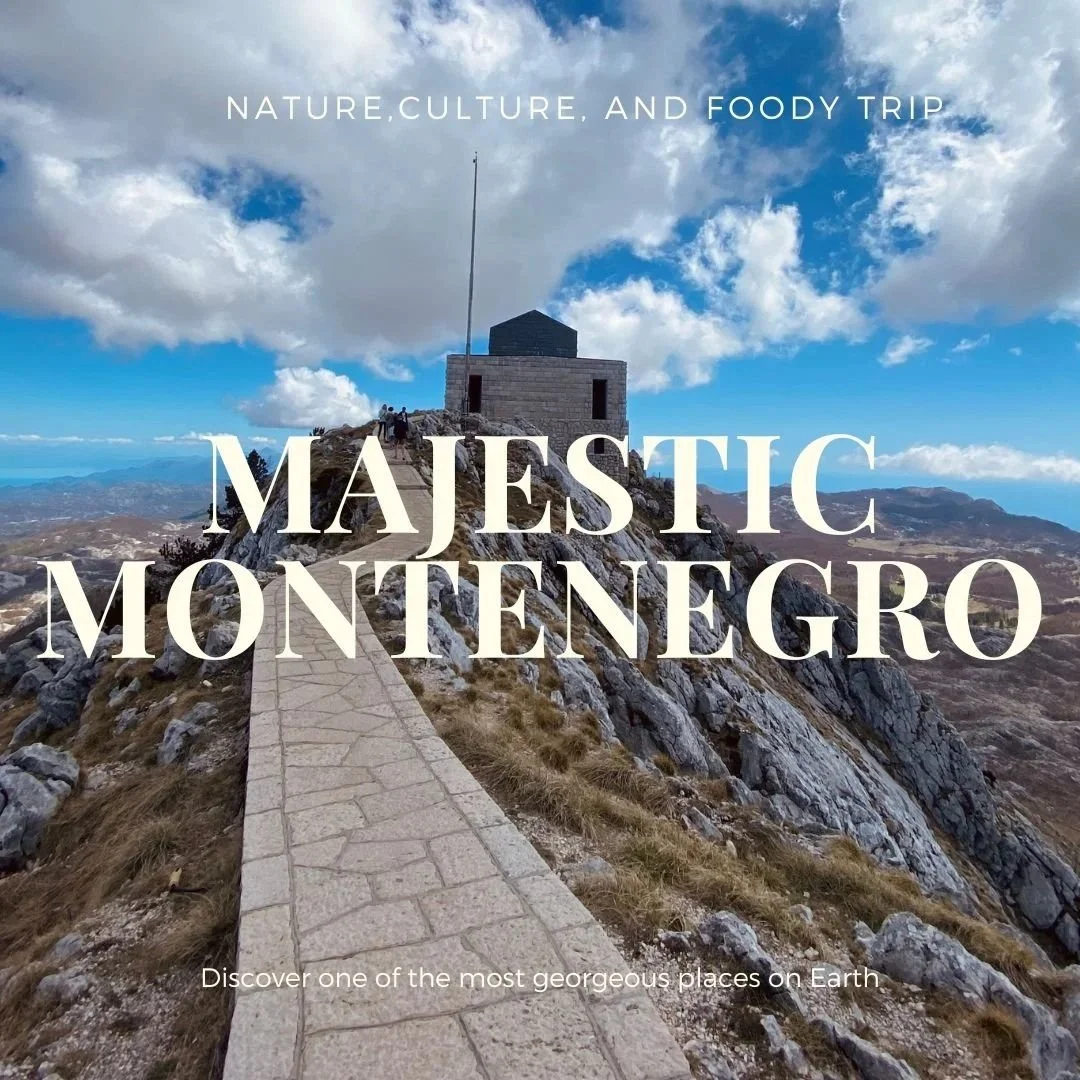
A journey through Lovcen National Park, Njegusi and Cetinje, combining mountain views, local flavors and Montenegro’s royal heritage.
Scenic Stops Along the Way
The journey to Lovćen is just as rewarding as the final destination. The famous Kotor Serpentine road, with its many curves and dramatic viewpoints, is one of the most scenic drives in Montenegro. Each turn reveals a new angle of the Bay of Kotor, with the mountains rising behind the coastline and the old town appearing far below.
A stop at one of the viewpoints along the route is essential, especially in the early morning or late afternoon when the light creates softer tones across the countryside. The villages and traditional stone houses along the way also offer glimpses into a slower, more authentic side of mountain life.
Before leaving the area, consider visiting Ivanova Korita, a peaceful valley within the national park known for its walking paths, fresh mountain air, and old-fashioned charm. It is a perfect place to pause, enjoy the surroundings, and experience the quieter side of summer in Montenegro away from the coastal crowds.
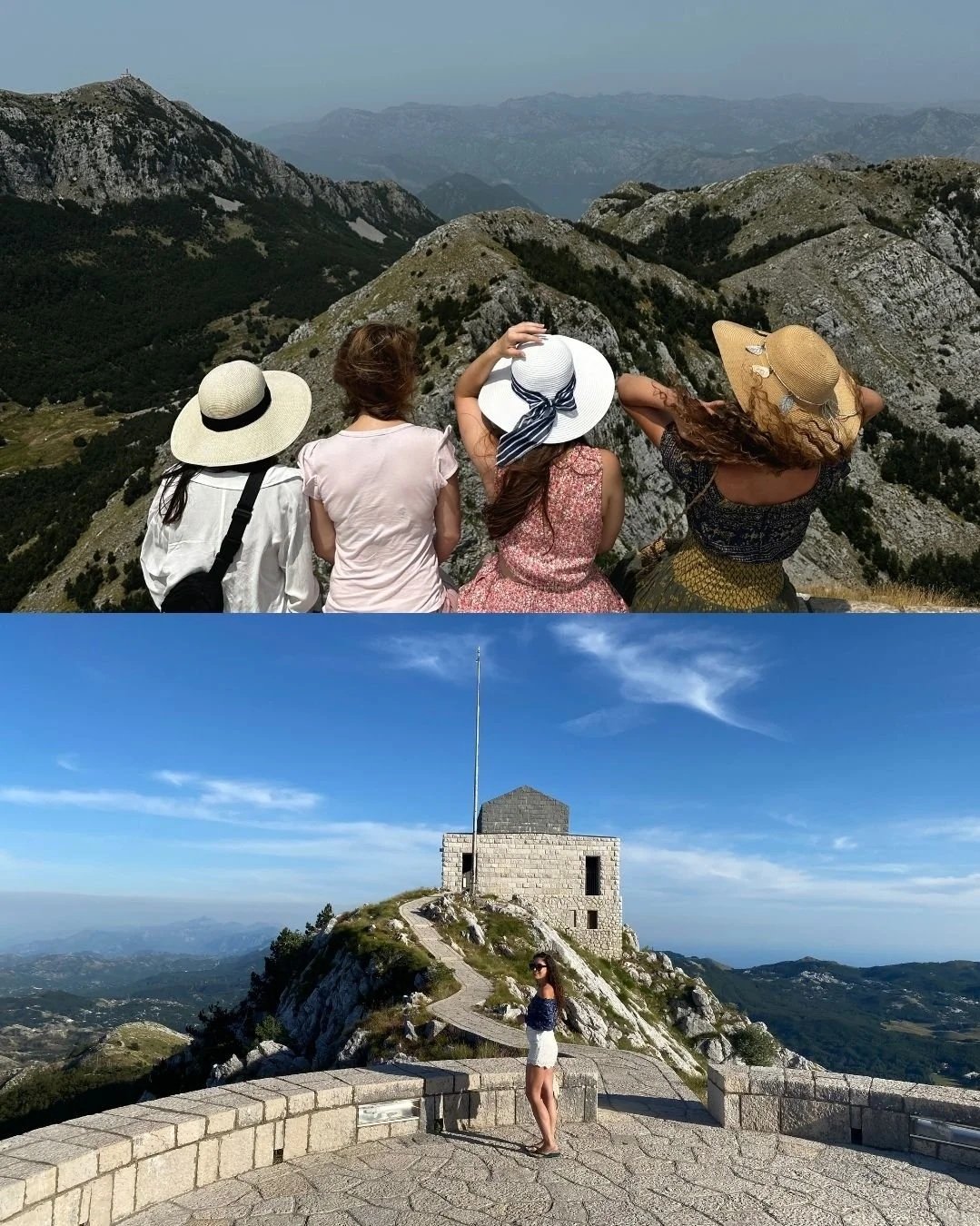
The Njegoš Mausoleum on Mount Lovćen with views across Montenegro.
7. Cruise Across Lake Skadar
Boat Cruises & Wildlife
Away from Montenegro’s dramatic coastline lies a completely different kind of scenery, one defined by calm waters, endless reeds, mountain reflections, and a sense of untouched nature. Lake Skadar, the largest lake in Southern Europe, offers a slower way to experience the country, where the journey is less about reaching a destination and more about observing the scenery as it unfolds.
A boat cruise is one of the best ways to explore this remarkable area. As you glide across the lake, you’ll pass small islands, traditional fishing villages, and still channels surrounded by water lilies and wild vegetation. The lake is also one of Europe’s most important bird habitats, home to more than 280 species, including the famous Dalmatian pelican, making it a favourite destination for nature lovers and photographers.
Each route reveals a different side of Lake Skadar. Some cruises focus on peaceful corners surrounded by nature, while others include historic landmarks such as old fortresses, monasteries, and fishing settlements that tell stories of life around the lake for generations.
Local Villages & Wine
The charm of Lake Skadar extends beyond its waters. Along the shoreline, small villages preserve a slower way of life, where stone houses, family-owned wineries, and traditional restaurants continue generations-old customs.
The village of Virpazar is the most popular starting point for exploring the lake and has become known for its connection to local food and wine. The surrounding region is part of Montenegro’s most important wine-producing area, where the indigenous Vranac grape creates rich red wines that pair naturally with local specialities.
A visit to Lake Skadar is an opportunity to experience Montenegro beyond its famous coastal towns. Enjoying a glass of local wine overlooking the lake, tasting freshly prepared fish, or meeting local producers offers a more personal connection to the destination and its traditions.
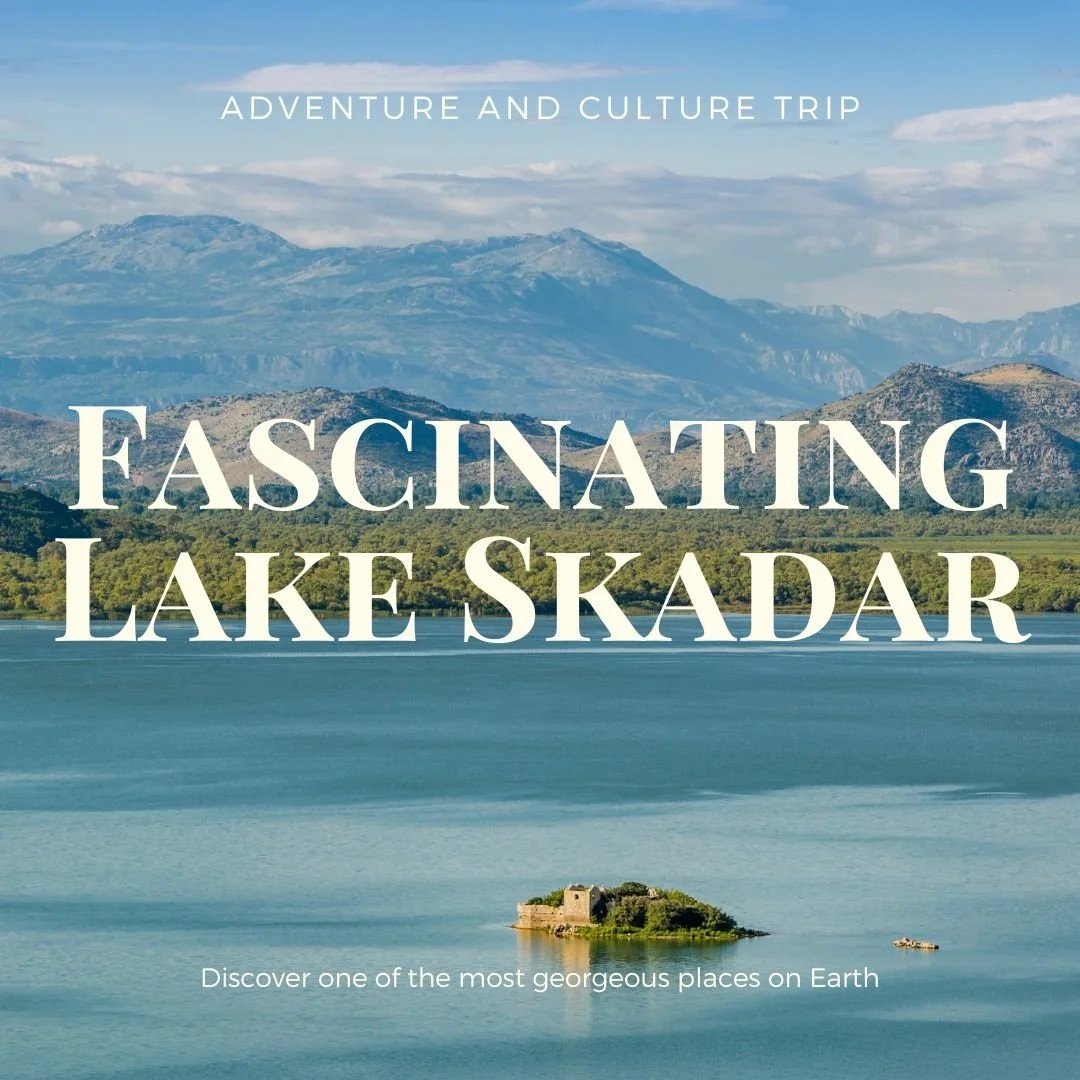
A private Lake Skadar experience with a boat ride, Besac Fortress, local wine tasting and traditional Montenegrin food.
Best Time for a Cruise
Summer mornings are often the ideal time to discover Lake Skadar. The temperatures are more comfortable, the water is usually calmer, and the early light creates beautiful reflections across the lake’s surface. It is also the best period for enjoying the peaceful atmosphere before the afternoon heat arrives.
Late afternoon cruises offer a different experience, especially for those who appreciate photography and quiet moments in nature. As the sun begins to lower behind the mountains, the scenery takes on warmer tones and the lake becomes even more serene.
For travellers looking to combine nature, culture, and authentic local experiences, a boat trip across Lake Skadar is one of the most rewarding additions to a summer in Montenegro. It reveals a side of the country that feels far removed from the busy coastal areas, yet remains just as captivating.
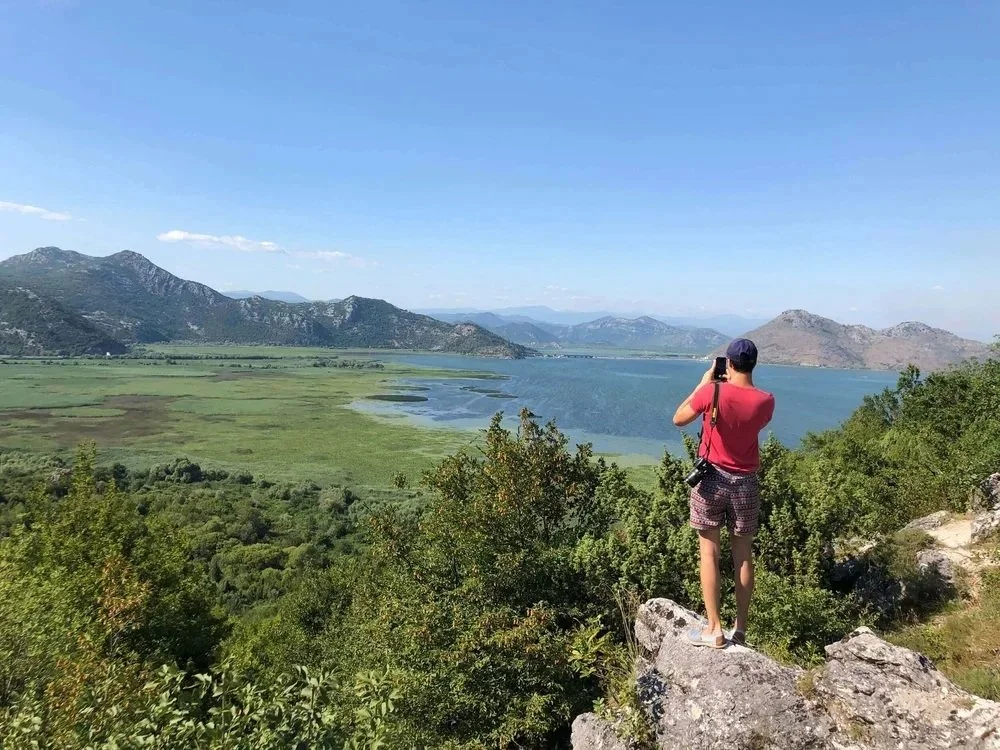
A scenic view of Lake Skadar in Montenegro.
8. Go on a Jeep Safari
Off-Road Adventures
For a different side of Montenegro, leave the coastal roads behind and head into terrain where mountain paths, forests, and remote villages uncover a slower rhythm of life. A jeep safari offers a chance to explore places that are often missed when travelling between the country’s main attractions, taking you beyond the usual routes and into the heart of Montenegro’s rugged terrain.
The experience is not only about the drive itself, but about the places you reach along the way. Narrow mountain roads, untouched wilderness, and changing scenery make every part of the journey feel unexpected. Depending on the route, a jeep safari can take you through areas such as Bjelasica, Biogradska Gora, or the highlands around Durmitor, where nature remains the main attraction.
Away from crowded viewpoints and busy summer streets, these off-road adventures offer a more personal way to experience Montenegro. The slower pace allows time to stop, explore, and appreciate the details that are easy to miss when travelling quickly through the country.
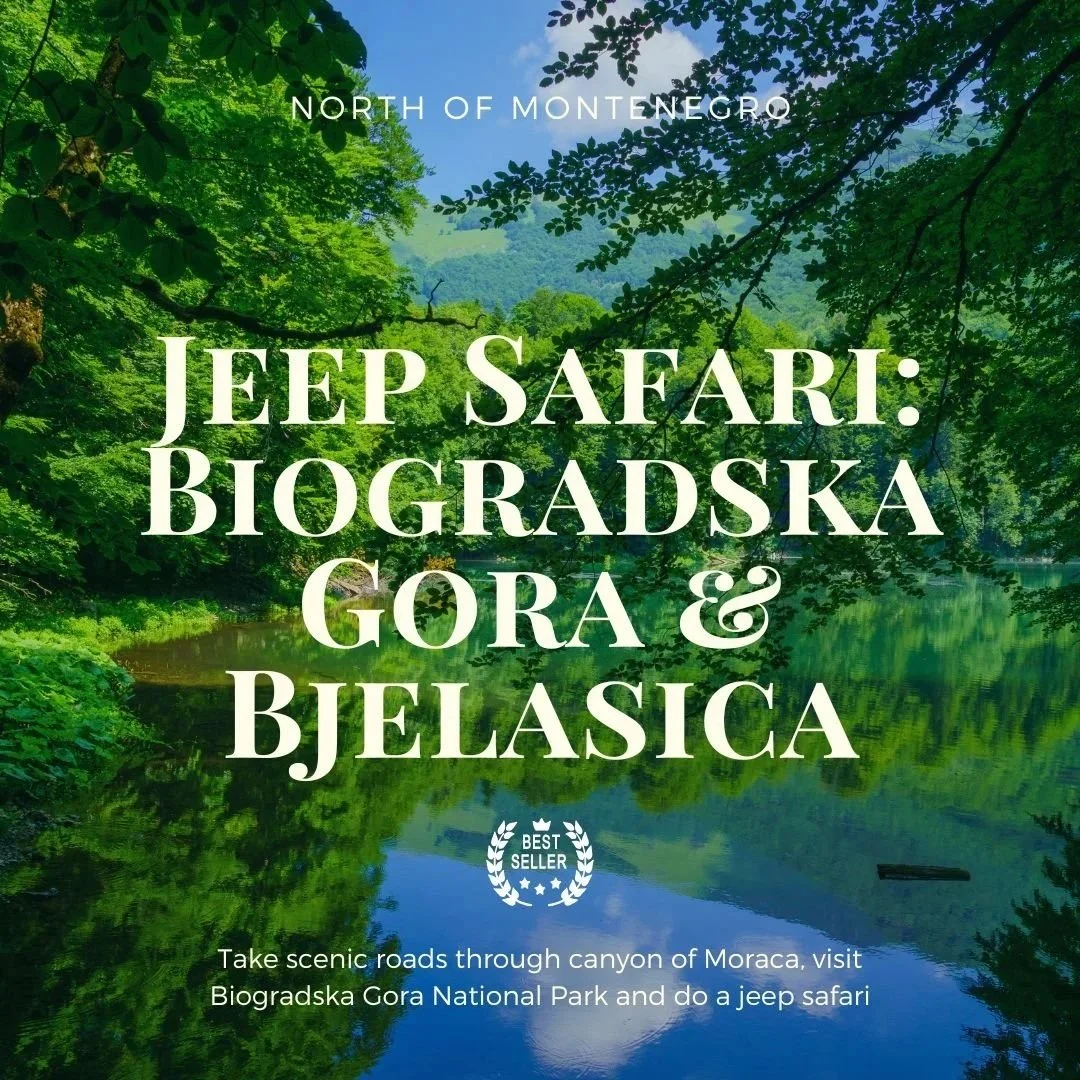
A Jeep safari through Biogradska Gora National Park and the Bjelasica Mountains, reaching the remote Pešića Lake.
Mountain Views
Montenegro’s mountains create some of its most dramatic terrain, and a jeep safari brings you closer to the viewpoints that are difficult to reach by standard vehicles. From open plateaus to forest-covered slopes, the scenery changes constantly as you gain altitude.
The Bjelasica mountain region is especially rewarding during the summer months, when green valleys, wildflower-covered meadows, and panoramic ridges create a completely different feel from the coast. In areas around Biogradska Gora National Park, the scenery becomes more dramatic, with ancient forests, mountain lakes, and peaceful corners shaped by nature rather than development.
One of the greatest pleasures of a mountain safari is the sense of space. Standing above the valleys with only peaks, forests, and open skies around you offers a rare moment of calm that feels far removed from everyday life.
What to Expect
A jeep safari in Montenegro is an experience built around discovery rather than speed. The routes usually include several stops for photography, short walks, local encounters, and moments to simply enjoy the surroundings.
Comfortable clothing and suitable footwear are recommended, as some parts of the journey may include uneven terrain and short walks through natural areas. Even during summer, mountain temperatures can be noticeably cooler than along the coast, especially in the morning or at higher elevations, so bringing a light layer is always a good idea.
For travellers who want to see more than the classic coastal highlights, a jeep safari adds another dimension to a Montenegro summer holiday. It uncovers the country’s wild interior, traditional mountain regions, and the natural beauty that exists beyond the Adriatic shoreline.
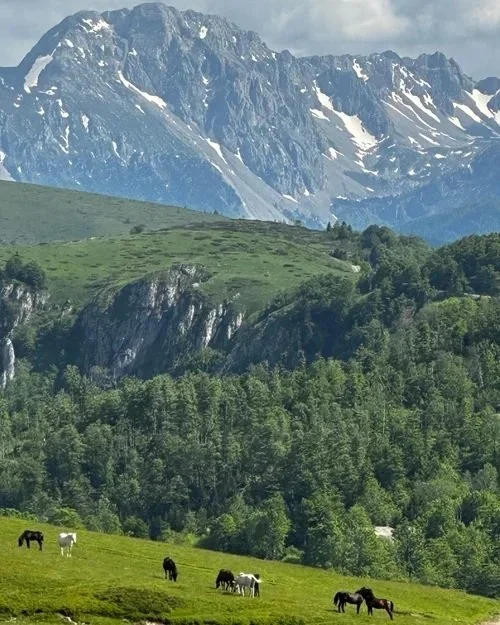
Biogradska Gora National Park and Mount Bjelasica in Montenegro.
9. Discover Durmitor National Park
Visit Black Lake
High in the north of Montenegro, where sharp mountain peaks rise above vast forests and open valleys, Durmitor National Park shows a completely different side of the country. Far from the Mediterranean atmosphere of the coast, this region offers a landscape shaped by glaciers, alpine lakes, and some of the most dramatic scenery in the Balkans.
The heart of the park is Black Lake (Crno Jezero), a peaceful glacial lake surrounded by dense pine forests and the peaks of Durmitor rising behind it. Located just a short distance from Žabljak, it is one of the most accessible natural attractions in northern Montenegro and a favourite stop for travellers exploring the mountains during the summer months.
A walk around the lake is one of the simplest yet most rewarding experiences in Durmitor. The easy trail follows the shoreline, offering constantly changing views as the reflections of the mountains move across the water. Early morning brings a particularly peaceful atmosphere, while late afternoon creates beautiful light across the forest and peaks.
Hiking Trails
For those who want to experience Montenegro beyond its viewpoints and coastal towns, Durmitor offers some of the country’s most impressive hiking opportunities. With more than a dozen peaks above 2,000 metres, the national park is a paradise for travellers who enjoy exploring on foot.
The trails range from gentle walks suitable for a relaxed day in nature to more challenging mountain routes for experienced hikers. Some paths lead through quiet forests and alpine meadows, while others climb towards higher elevations where the terrain becomes more rugged and dramatic.
One of the most famous routes leads towards Bobotov Kuk, the highest peak of Durmitor at 2,523 metres. The climb requires good preparation, but the sense of achievement and the views from the top make it one of Montenegro’s most memorable mountain experiences.
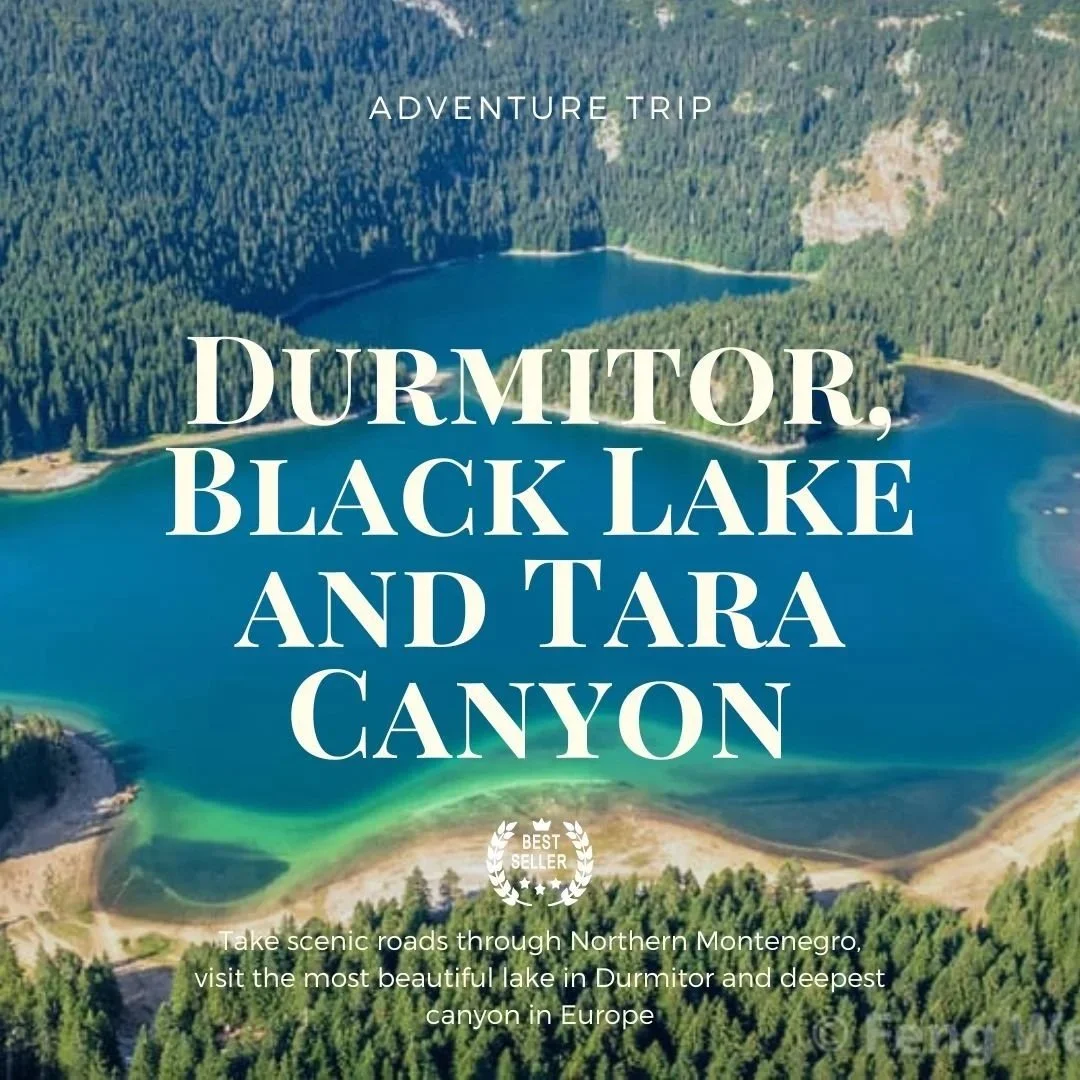
A private day tour through Durmitor National Park, Black Lake and Tara Canyon, with an optional zip-line adventure.
Scenic Viewpoints
Durmitor’s beauty is not limited to one location. The entire park feels like a collection of natural viewpoints, with every road, trail, and mountain pass unveiling a new perspective of the scenery.
The Durmitor Ring, a scenic route around the mountain massif, is one of the best ways to appreciate the scale and diversity of the area. Along the way, travellers pass through traditional villages, wide plateaus, deep valleys, and viewpoints overlooking some of Montenegro’s most dramatic terrain.
For a truly unforgettable experience, visit during the golden hours of early morning or sunset, when the mountain peaks take on warmer colours and the hush of the countryside becomes even more noticeable. Durmitor is not simply a place to visit, it is a place to slow down, breathe fresh mountain air, and experience the wild beauty that makes summer in Montenegro so diverse.
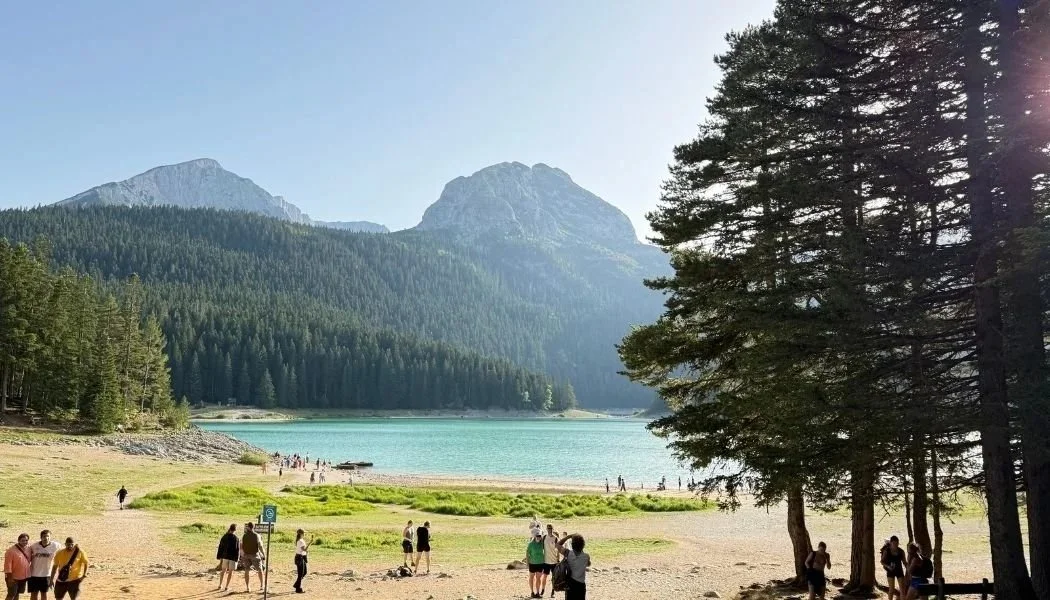
Durmitor National Park in Montenegro
10. Go White Water Rafting on the Tara River
Why Tara Canyon Is Famous
Hidden among the mountains of northern Montenegro, the Tara Canyon is one of the country’s most remarkable natural wonders. Carved over thousands of years by the Tara River, this vast canyon stretches for around 80 kilometres and reaches depths of more than 1,300 metres in some areas, making it one of the deepest river canyons in Europe.
The scenery here feels completely different from Montenegro’s coastal regions. Instead of stone towns and seaside views, this landscape is defined by dramatic cliffs, dense forests, clear mountain water, and a sense of wilderness that has remained largely untouched. The Tara River is also protected as part of Durmitor National Park, a UNESCO World Heritage Site, preserving the exceptional beauty of this area for future generations.
For travellers looking for adventure in Montenegro, Tara Canyon offers one of the most unforgettable ways to experience the country’s natural side. The combination of dramatic terrain and the rhythm of the river creates an experience that goes far beyond a simple outdoor activity.
Rafting Experience
Following the Tara River by raft is an experience that brings you directly into the heart of the canyon. As the boat moves through crystal-clear water, the surroundings constantly change, from narrow sections surrounded by towering cliffs to calmer stretches where you can simply admire the scenery.
During a rafting trip, there are moments of excitement as you navigate the river’s rapids, balanced with calmer stretches where the only sounds are the flowing water and the forest around you. Depending on the route and water conditions, trips can include stops for swimming, photography, or exploring small beaches along the riverbanks.
Beyond the adventure itself, rafting on the Tara River offers a rare opportunity to experience Montenegro’s wilderness from a completely different perspective. The scale of the canyon is difficult to appreciate from above; being surrounded by its walls while floating through the valley creates a much stronger connection with the landscape.

An adventure through Tara Canyon with white-water rafting, ziplining and a traditional Montenegrin lunch.
Safety & Best Season
The rafting season on the Tara River generally runs from spring through early autumn, with summer being one of the most popular periods thanks to warmer weather and comfortable conditions for spending time outdoors. July and August are especially appealing for visitors who want to combine adventure with a refreshing escape from the heat of the coast.
Professional rafting operators provide the necessary equipment and experienced guides who know the river and its changing conditions. No previous rafting experience is required for many routes, making it an accessible adventure for travellers who want to try something new while exploring Montenegro’s mountain regions.
Comfortable sportswear, swimwear, and shoes suitable for water are recommended. Bringing a waterproof camera can also be worthwhile, as the journey through Tara Canyon offers some of the most impressive natural scenery you will encounter during your summer in Montenegro.
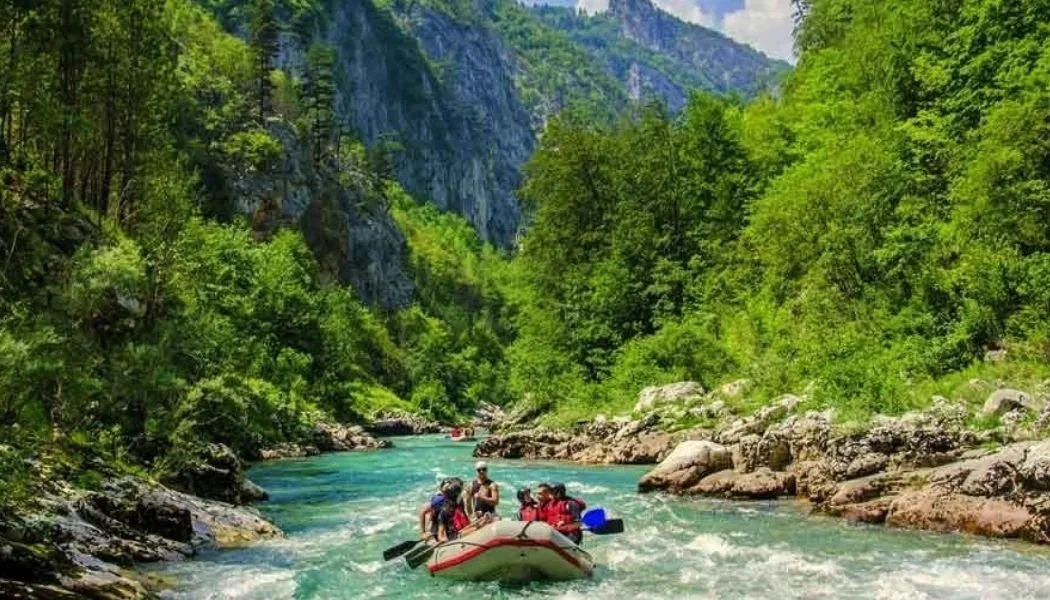
Rafting on the Tara River in Montenegro.
11. Visit Ostrog Monastery
History & Spiritual Significance
Carved into a steep cliff face between the coastal region and Montenegro’s northern mountains, Ostrog Monastery is one of the country’s most remarkable cultural and spiritual landmarks. Unlike many historic sites that stand within cities or villages, Ostrog appears almost as a natural extension of the rock itself, creating a setting that has inspired visitors for centuries.
Founded in the 17th century by Saint Basil of Ostrog, the monastery became one of the most important Orthodox pilgrimage sites in the Balkans. Its position, built into the vertical cliffs of Mount Ostroška Greda, adds to the sense of quiet and devotion that surrounds the complex.
Good to know: Entry to Ostrog Monastery is free, though donations are welcome, and it's open from early morning into the evening. As an active monastery, a modest dress code applies, shoulders and knees covered for both men and women.
The monastery is divided into the Upper and Lower Monastery, with the Upper Monastery being the most recognisable part of Ostrog. Inside the small cave churches, visitors can see preserved frescoes and religious treasures, while the atmosphere reflects the deep spiritual importance this place holds for Orthodox believers from Montenegro and beyond.
What to Expect
A visit to Ostrog is unlike a typical sightseeing stop. The journey itself is part of the experience, with the road winding through mountain scenery before reaching the monastery carved high above the valley. As you approach the site, the dramatic location becomes one of the first things that captures your attention.
The Upper Monastery offers a peaceful environment where visitors often take time to reflect, admire the architecture, or simply enjoy the views across the surrounding countryside. Even for those who are not visiting for religious reasons, the combination of history, location, and human dedication behind its construction makes Ostrog a fascinating place to explore.
The monastery is also an opportunity to discover a slower side of Montenegro, away from the coast and its summer energy. The surrounding scenery, mountain roads, and sense of tradition create an experience that feels deeply connected to the country’s heritage.
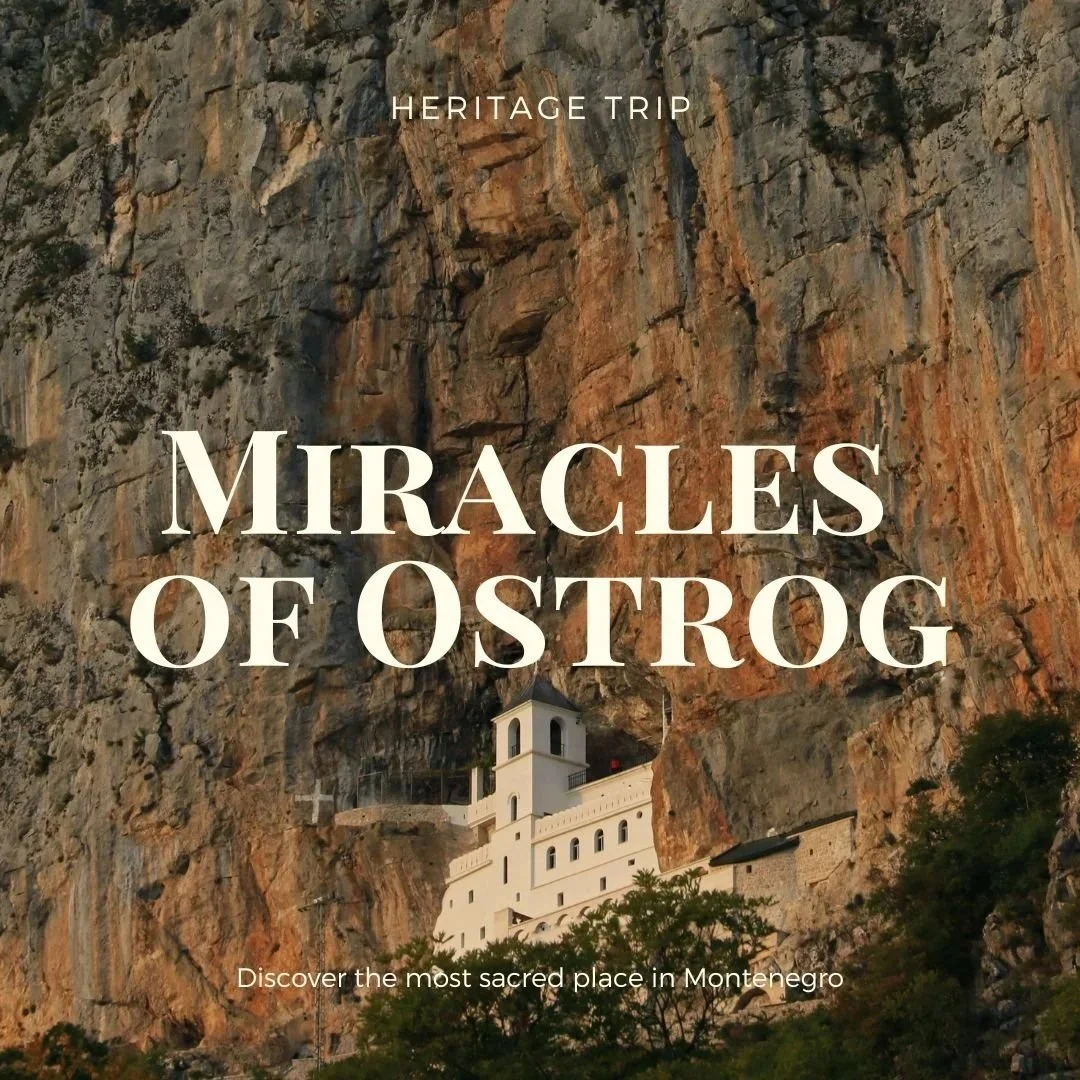
A private visit to Ostrog Monastery, exploring its history, sacred sites and mountain views.
Visitor Tips
Ostrog Monastery can be visited throughout the year, but summer mornings are often the most comfortable time to arrive. Starting early helps avoid the strongest heat and allows for a more peaceful visit before larger groups arrive.
Visitors should dress respectfully, as Ostrog remains an active religious site. Comfortable shoes are recommended due to the uneven paths and walking sections around the monastery. Photography rules may vary in certain areas, so it is important to follow the guidance provided on site.
For travellers exploring Montenegro, a visit to Ostrog offers a meaningful pause between coastal adventures and mountain discoveries. It is a place where history, faith, and the dramatic beauty of the landscape come together in one of the country’s most memorable locations.
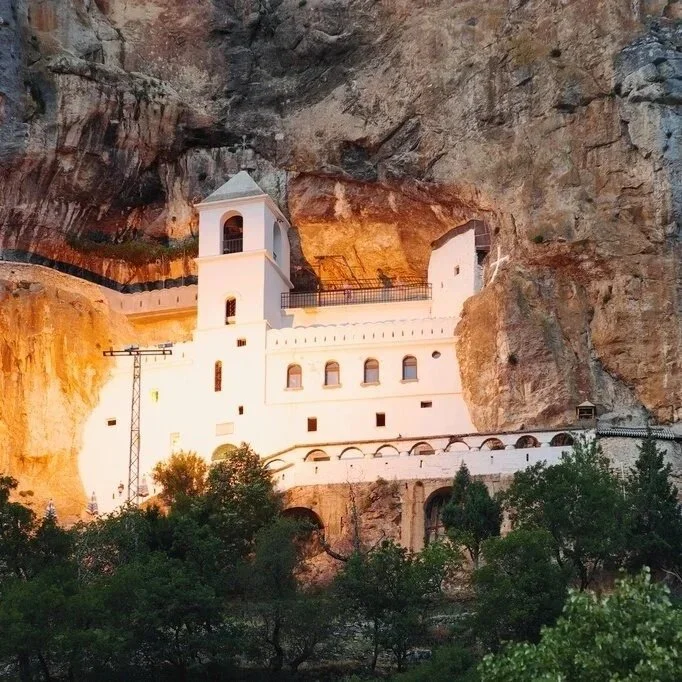
Ostrog Monastery built into the cliffs of Montenegro.
12. Explore Cetinje, Montenegro’s Historic Royal Capital
Top Attractions
Away from the coastal towns and mountain scenery, Cetinje offers a glimpse into the historical heart of Montenegro. Once the royal capital of the country, this small city carries a unique atmosphere shaped by centuries of tradition, diplomacy, and cultural heritage.
Walking through Cetinje feels different from exploring Montenegro’s larger destinations. The streets are calmer, the architecture has a distinctly European character, and former royal residences stand alongside historic monasteries and embassies that reflect the city’s important role throughout the country’s history.
One of the most significant landmarks is Cetinje Monastery, a spiritual centre that has played a major role in Montenegrin history for centuries. Nearby, the former Royal Palace, now home to part of the National Museum of Montenegro, offers insight into the life of the country’s former rulers and the traditions of the old royal court.
A stroll along Njegoševa Street is also one of the best ways to experience the city. With its colourful facades, historic buildings, and relaxed pace, it offers a more intimate side of Montenegro that is often missed by visitors who stay only along the coast.
Museums Worth Visiting
For travellers interested in Montenegro’s history and culture, Cetinje is one of the most rewarding places to explore. Often described as the country’s cultural capital, the city is home to several museums that preserve stories of art, politics, royalty, and national identity.
The National Museum of Montenegro brings together several important collections, including historical artefacts, artworks, and royal memorabilia. The King Nikola’s Palace provides a closer look at the lifestyle of Montenegro’s last monarch, while the Museum of King Nikola and other nearby collections help explain the country’s transformation through different historical periods.
Another fascinating stop is the Museum of Money, which presents the development of Montenegro’s currency and financial history, offering a different perspective on the country’s past. Visiting these museums allows travellers to understand Montenegro beyond its landscapes and discover the stories that shaped its identity.
Local Cafés & Atmosphere
Cetinje is a place to experience slowly. Unlike the energetic rhythm of the seaside during summer, the city invites visitors to sit down, enjoy a coffee, and watch everyday life unfold around historic streets and quiet squares.
Small cafés scattered around the centre offer the perfect setting for a relaxed break after exploring the museums and landmarks. Locals often gather for long coffee conversations, creating a mood that feels authentic and welcoming rather than focused purely on tourism.
Combining history, culture, and a slower pace of life, Cetinje makes a beautiful addition to a Montenegro itinerary. It shows a different chapter of the country, one built not around beaches and summer crowds, but around heritage, stories, and the traditions that continue to shape Montenegro today.
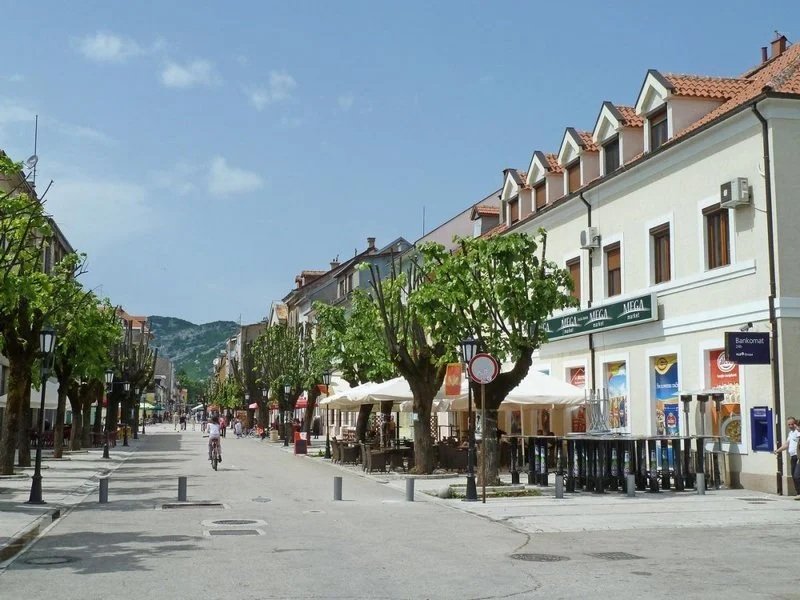
The main street in Cetinje, Montenegro.
13. Visit Prokletije National Park
Montenegro’s Wildest Corner
Tucked into the far southeast of the country, along the borders with Albania and Kosovo, Prokletije National Park feels like a different Montenegro altogether. Known as the “Accursed Mountains,” this is the youngest national park, established in 2009.
Jagged limestone peaks, some rising above 2,500 metres, alpine meadows, and glacial lakes replace the coastline entirely here. For travellers who’ve already seen the Bay of Kotor and the beaches of Budva, Prokletije offers a genuinely different side of a Montenegro summer holiday.
What to See and Do
Most visits are based around Grebaje Valley or the nearby villages of Plav, Gusinje, and Vusanje, which sit right at the edge of the park and serve as the main starting points for hiking trails. The valley is surrounded by the dramatic Karanfili peaks, and even a short walk from the trailhead delivers views that feel far more alpine than Balkan.
For a longer day out, the hike toward Zla Kolata, Montenegro’s highest peak at 2,534 metres, rewards experienced hikers with sweeping views across Albania and Kosovo. Less demanding is the walk to Hrid Lake, nicknamed the “Lake of Happiness” in local legend, or a visit to Lake Plav, the country’s largest glacial lake, where the water stays a crisp 12°C even in the height of summer.
Practical Tips
The best hiking season runs from June to September, since snow can linger on the higher trails well into early summer. Marked paths have improved over the past few years, but this remains rugged, remote terrain, and hiring a local guide is a good idea for anything beyond the easier valley walks.
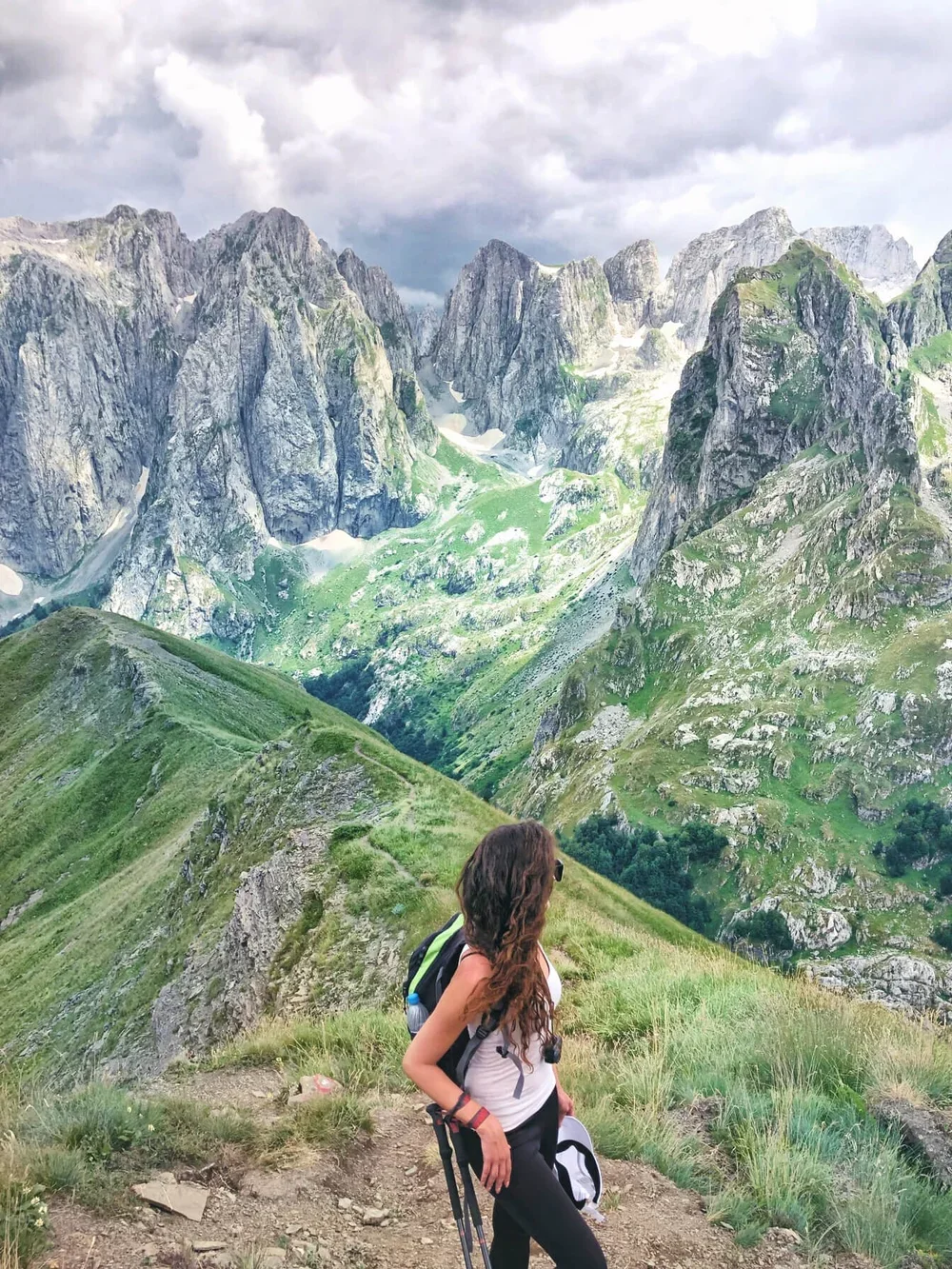
Prokletije National Park in Montenegro.
14. Enjoy a Wine Tasting Experience
Montenegro's Wine Regions
Beyond its coastline and mountain ranges, Montenegro is also home to one of the oldest winemaking traditions in the Balkans. Thanks to its sunny climate, fertile valleys, and generations of experience, wine has become an important part of the country's culture, offering travellers another way to discover local traditions.
The region surrounding Lake Skadar is considered the heart of Montenegrin wine production. Rolling vineyards stretch across the landscape between Virpazar, Rijeka Crnojevića, and the wider Crmnica region, where family-owned wineries stand alongside larger estates that have helped introduce Montenegrin wines to international audiences.
Visiting these vineyards offers far more than a simple tasting. The peaceful countryside, views across the lake and surrounding hills, and warm hospitality create an experience that feels both authentic and refined, making it a standout addition to any summer itinerary.
Wines You Should Try
No visit to Montenegro's wine country would be complete without tasting Vranac, the country's most celebrated indigenous grape variety. Known for producing full-bodied red wines with notes of dark berries, ripe cherries, and subtle spices, Vranac has become a symbol of Montenegrin winemaking and pairs beautifully with local meat dishes and aged cheeses.
Another variety worth discovering is Krstač, a rare white grape grown almost exclusively in Montenegro. Its fresh character, delicate floral aromas, and crisp finish make it especially enjoyable during the warmer months, particularly alongside seafood and lighter Mediterranean cuisine.
Many wineries also produce limited seasonal labels and small-batch wines that are difficult to find outside the country. Sampling these bottles offers travellers the chance to experience flavours that remain closely connected to the region where they are made.
Vineyard Experiences
A visit to a Montenegrin vineyard is about much more than wine. Walking among the vines, learning about traditional production methods, and sharing stories with local winemakers creates a deeper connection with the land and the people who have cultivated it for generations.
Many wineries welcome guests with guided tastings paired with regional cheeses, cured meats, olive oil, and homemade specialities. Some also offer tours through the vineyards and wine cellars, allowing visitors to better understand the journey from grape to glass.
As the afternoon light settles over the vineyards and the pace of the day begins to slow, it becomes clear why wine tasting has become one of the most rewarding experiences during a summer in Montenegro. It is an elegant way to discover the country's traditions, hospitality, and flavours while enjoying the peaceful beauty of its countryside.
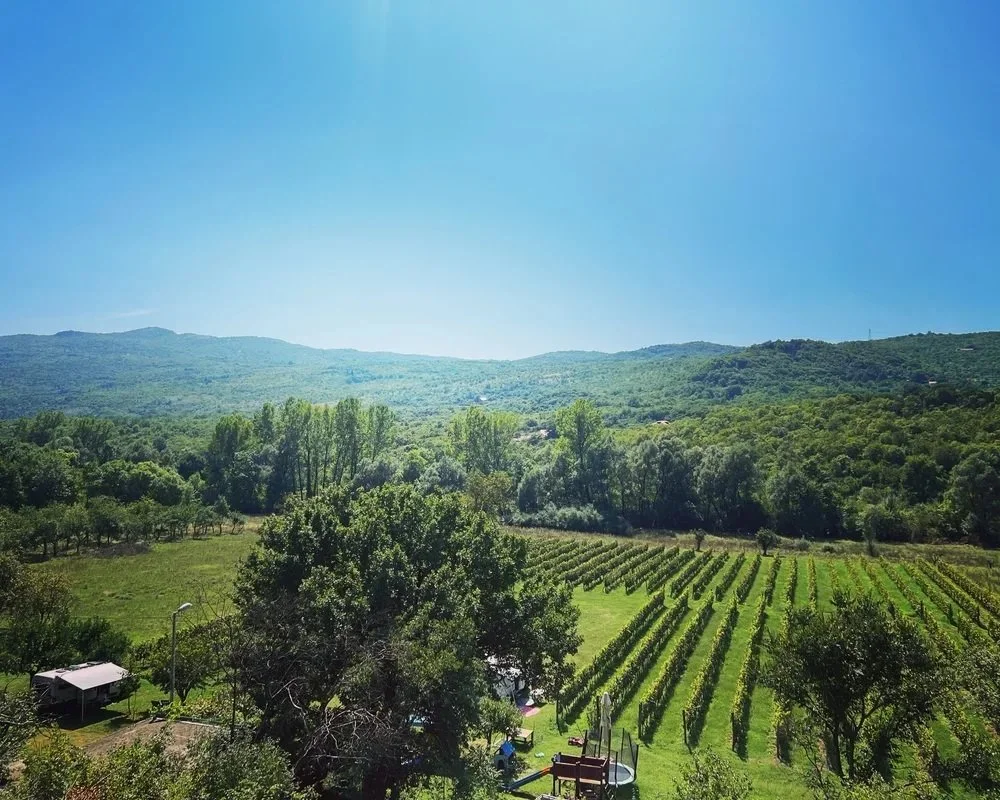
A vineyard in Montenegro
15. Watch the Sunset from Sveti Stefan Viewpoint
Why It's One of Montenegro's Best Views
Some places leave a lasting impression not because of what you do there, but because of how they make you feel. The viewpoint overlooking Sveti Stefan is one of those places. Perched above Montenegro's most iconic islet, it offers a scene that has become synonymous with the country's coastline, pink pebble beaches, crystal-clear Adriatic waters, centuries-old stone buildings, and the dramatic backdrop of cypress-covered hills.
Although Sveti Stefan itself is now an exclusive resort with limited public access, the viewpoint above the island remains open to everyone and is widely considered one of the most beautiful panoramic spots in Montenegro. It is a place where travellers often pause, not to rush through another attraction, but simply to appreciate the view and watch the light transform the coastline.
Whether it is your first visit to Montenegro or your fifth, the view has a way of feeling timeless. It captures everything that makes the country's coast so distinctive, natural beauty, elegant architecture, and the quiet charm of the Adriatic.
Best Time to Visit
While the viewpoint is impressive throughout the day, the final hours before sunset reveal its most memorable side. As the sun begins to descend over the Adriatic, warm golden light gradually washes over the stone roofs of Sveti Stefan, while the sea shifts through shades of turquoise, sapphire, and soft amber.
Arriving around an hour before sunset allows enough time to enjoy the changing colours, take a leisurely walk along the nearby coastal paths, and soak up the mood before the sky begins to fade. During the summer season, evenings are pleasantly warm, making this one of the most relaxing moments of the day.
For those travelling along Montenegro's coast, ending the afternoon here feels like a fitting conclusion to a day of exploring beaches, historic towns, and hidden coves.
Photography Tips
The Sveti Stefan viewpoint is one of the most photographed locations in Montenegro, yet a little patience can make your images feel far more personal. Rather than taking a quick photograph upon arrival, spend time exploring different angles along the roadside viewpoints and nearby walking paths. Even a small change in perspective can reveal a completely different composition.
A camera or smartphone with a zoom lens can help capture the intricate details of the island without losing the surrounding landscape, while a wide-angle shot works beautifully for including the coastline, mountains, and Adriatic Sea in a single frame.
As daylight begins to soften, reflections on the water become gentler and colours grow richer, creating ideal conditions for photography. Even so, some of the most memorable moments are often the ones that never make it into a photograph, the quiet pause as the sun disappears beyond the horizon, leaving Montenegro's coastline wrapped in the last light of the day.
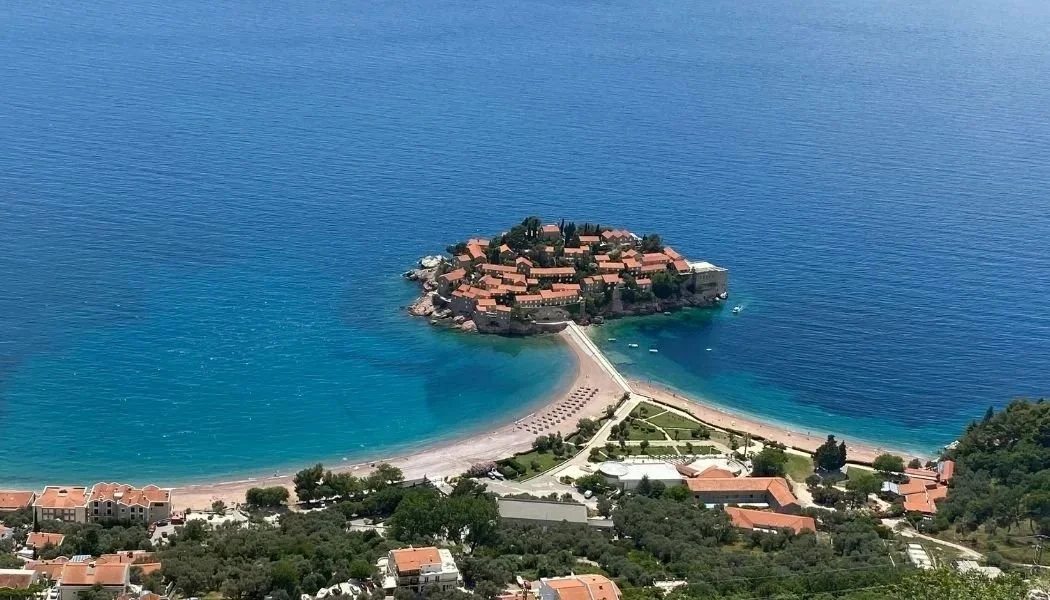
A beautiful view of Sveti Stefan
Frequently Asked Questions
Is Montenegro worth visiting in summer?
Absolutely. Summer is one of the best times to experience everything Montenegro has to offer, from the Adriatic coastline and historic towns to national parks and mountain wilderness. One of the country's greatest advantages is its diversity. Within just a few hours, you can swim in the sea, enjoy lunch overlooking a medieval bay, and finish the day surrounded by mountain peaks.
Beyond its natural beauty, summer also brings a lively atmosphere with waterfront restaurants, cultural events, boat trips, and longer daylight hours that make it easier to explore more in a single day. Whether you're looking for relaxation, outdoor adventures, or cultural experiences, Montenegro offers a balance that few destinations of its size can match.
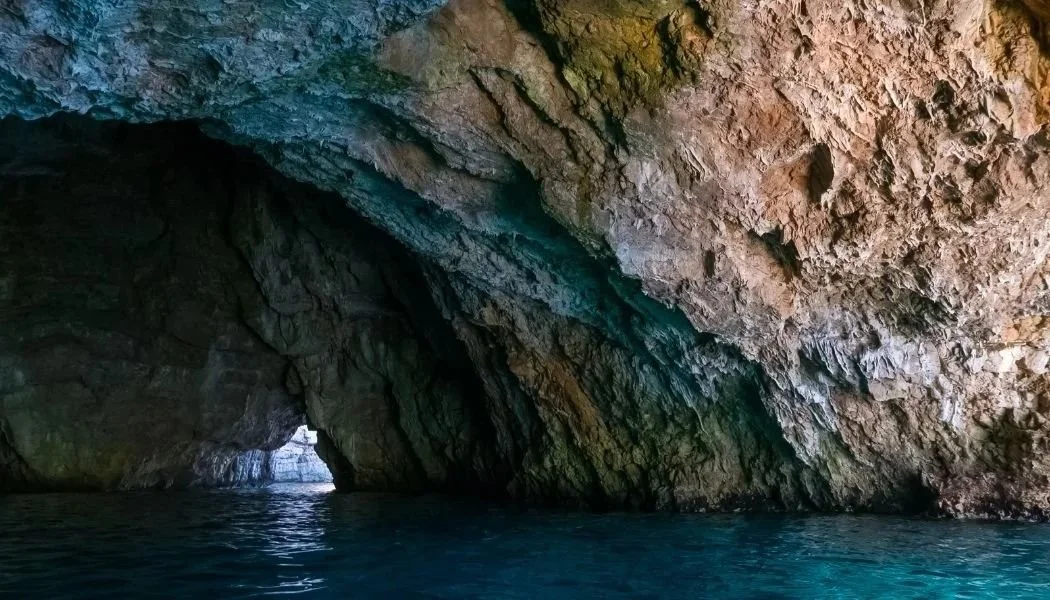
The Blue Cave on the Montenegrin coast.
What are the best summer activities in Montenegro?
The best experiences depend on the type of trip you're looking for, but some activities consistently stand out. Cruising through the Bay of Kotor, visiting the Blue Cave, relaxing on the beaches of the Budva Riviera, and watching the sunset above Sveti Stefan are among the most memorable coastal experiences.
Away from the sea, Montenegro offers equally rewarding adventures, including hiking in Durmitor National Park, rafting through Tara Canyon, exploring Lovćen National Park, taking a jeep safari across mountain trails, discovering the vineyards around Lake Skadar, and visiting historic towns such as Cetinje and Kotor. Combining the coast with the mountains gives you the most complete picture of the country.
How many days do you need in Montenegro?
Although Montenegro is relatively small, it offers far more than many travellers expect. A stay of five to seven days allows enough time to experience the highlights of the coast while also exploring destinations inland, including national parks, mountain villages, and cultural landmarks.
If your schedule allows, spending seven to ten days provides a more relaxed pace and creates opportunities to discover lesser-known places without rushing from one attraction to the next. The country's short driving distances make it easy to experience a remarkable variety of landscapes within a single trip.
Is Montenegro expensive in summer?
Montenegro offers a wider range of travel experiences than many Mediterranean destinations. While luxury hotels, private boat tours, and fine dining are available for those seeking a premium holiday, there are also excellent boutique accommodations, local restaurants, and authentic experiences that provide exceptional value.
Prices tend to be highest during July and August, particularly in popular coastal towns such as Budva, Kotor, and Tivat. Travelling in June or September often means slightly lower prices, fewer crowds, and equally enjoyable weather, making these months a favourite among experienced travellers.
Best Time to Visit: Crowds & Prices by Month
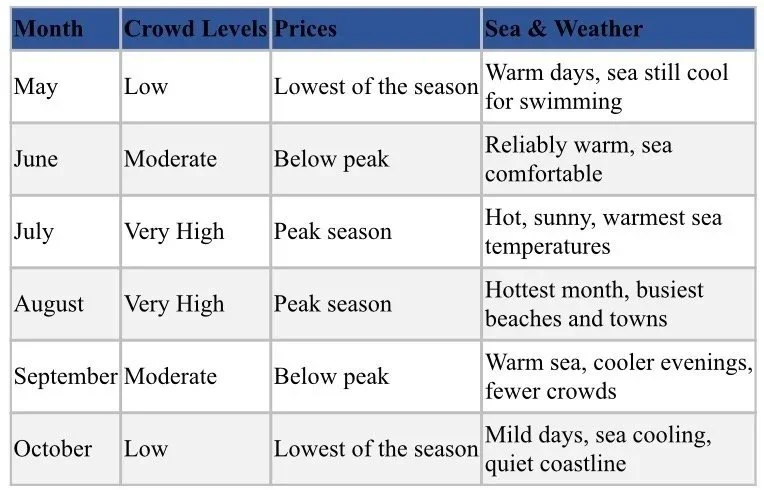
A month-by-month table showing the best time to visit Montenegro, including crowds and travel prices.
What's the best way to explore Montenegro?
The best way to experience Montenegro is by combining several regions instead of staying in one place. The country's compact size makes it possible to travel comfortably between the coast, historic towns, lakes, and mountain scenery, often within the same day.
For travellers who prefer a seamless experience, joining professionally organised tours or travelling with a private guide allows you to discover the country's highlights without worrying about logistics, parking, or planning routes. It also creates more time to appreciate the scenery, local culture, and hidden places that make Montenegro such a rewarding destination to explore.
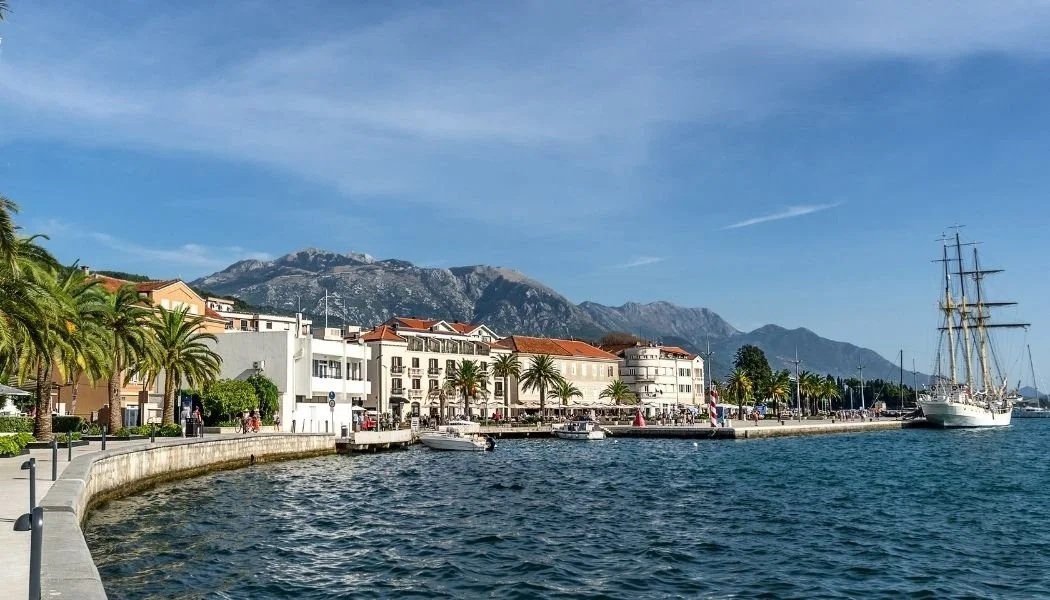
Porto Montenegro marina in Tivat.
Make the Most of Your Summer in Montenegro
Some destinations are remembered for a single landmark or a beautiful beach. Montenegro leaves a different kind of impression. It is a country where every day can unfold in a new landscape, from quiet mornings on the Adriatic to afternoons in the mountains, peaceful vineyard lunches, centuries-old towns, and evenings spent watching the sun disappear behind the coastline.
The beauty of travelling here lies in experiencing more than one side of the country. Combining the coast with the national parks, historic towns with hidden villages, and local traditions with unforgettable outdoor adventures explains why so many visitors leave wishing they had stayed longer.
Planning the perfect itinerary, however, isn't always as simple as it looks. Choosing the right routes, finding authentic experiences, and making the most of your time can completely change the way you experience Montenegro.
After all, the best journeys aren't measured by how many places you visit, they're remembered for how those places made you feel. We look forward to helping you discover Montenegro in a way you'll remember long after your journey ends.