
Is Montenegro Worth Visiting? An Honest Answer for Travellers
Montenegro occupies a rare space, dramatic enough to genuinely surprise you, compact enough to experience fully in a single trip. Here is what that actually means in practice, including the parts people rarely discuss upfront.
What Montenegro Actually Offers
Montenegro is one of Europe's smaller countries, roughly the size of Connecticut, yet its geography is unusually varied. Within a two-hour drive, you move from Adriatic beaches and medieval fortresses to mountain passes, glacial lakes, and wine valleys. That compression of landscape is genuinely unusual and is the foundation of most travellers' positive impressions.
The Bay of Kotor, a dramatic inland sea flanked by limestone mountains, is the country's most recognisable image. But the country extends well beyond it: Durmitor National Park in the north offers some of the Balkans' finest mountain scenery, Lake Skadar in the south forms Europe's largest bird reserve, and towns like Perast, Herceg Novi, and Ulcinj each carry a distinctly different character.
Montenegro joined NATO in 2017 and is an EU candidate country. The euro is the official currency. English is widely spoken in tourist areas, and the country is straightforward to navigate, which partly explains why visitor numbers have risen sharply over the past five years. Read more about Montenegro itself here.
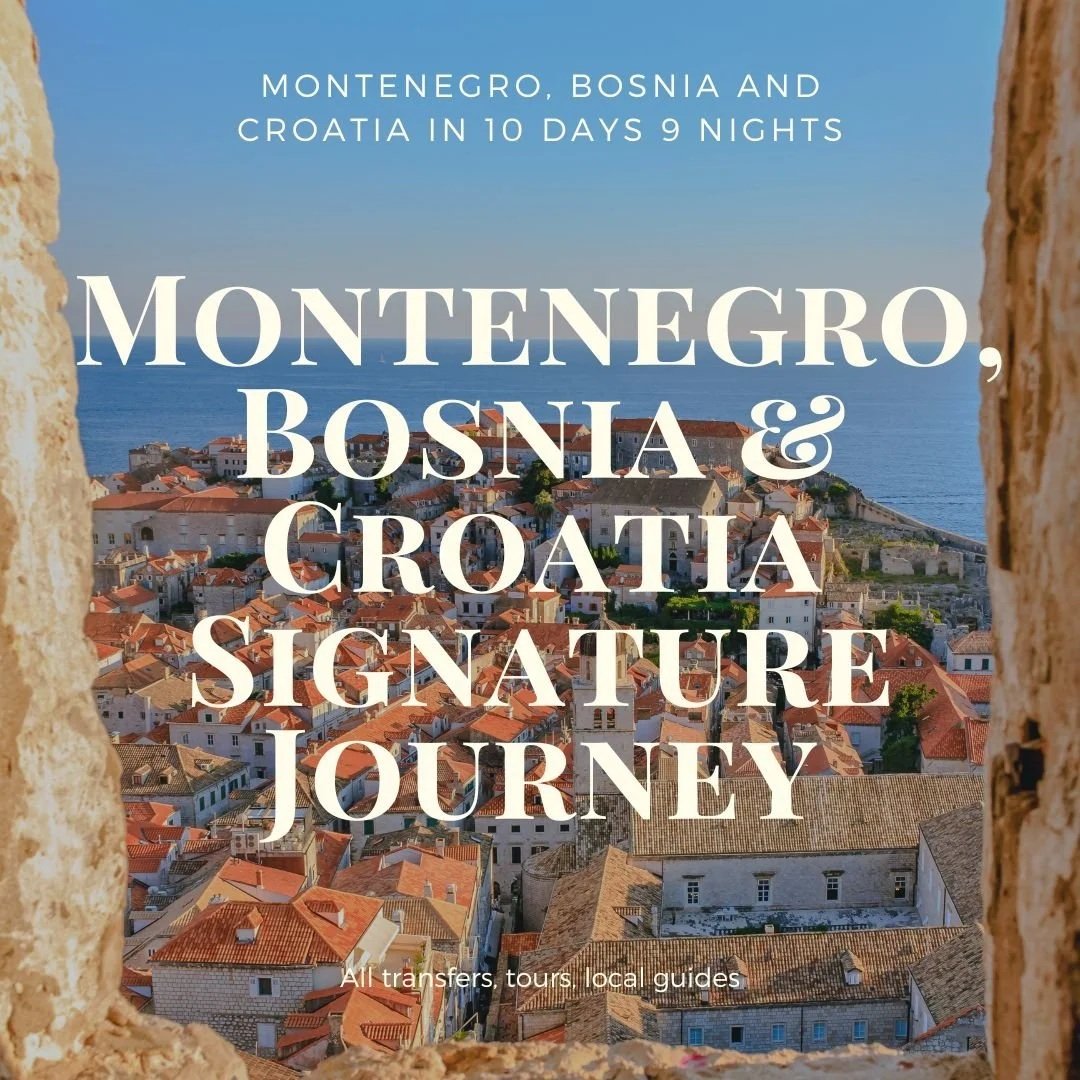
Explore Montenegro, Bosnia and Croatia on a signature journey that combines Adriatic coastline, cultural heritage, and diverse landscapes across the Western Balkans.
Montenegro vs Croatia vs Albania
This comparison comes up constantly in travel planning, and it is worth addressing directly rather than sidestepping it.
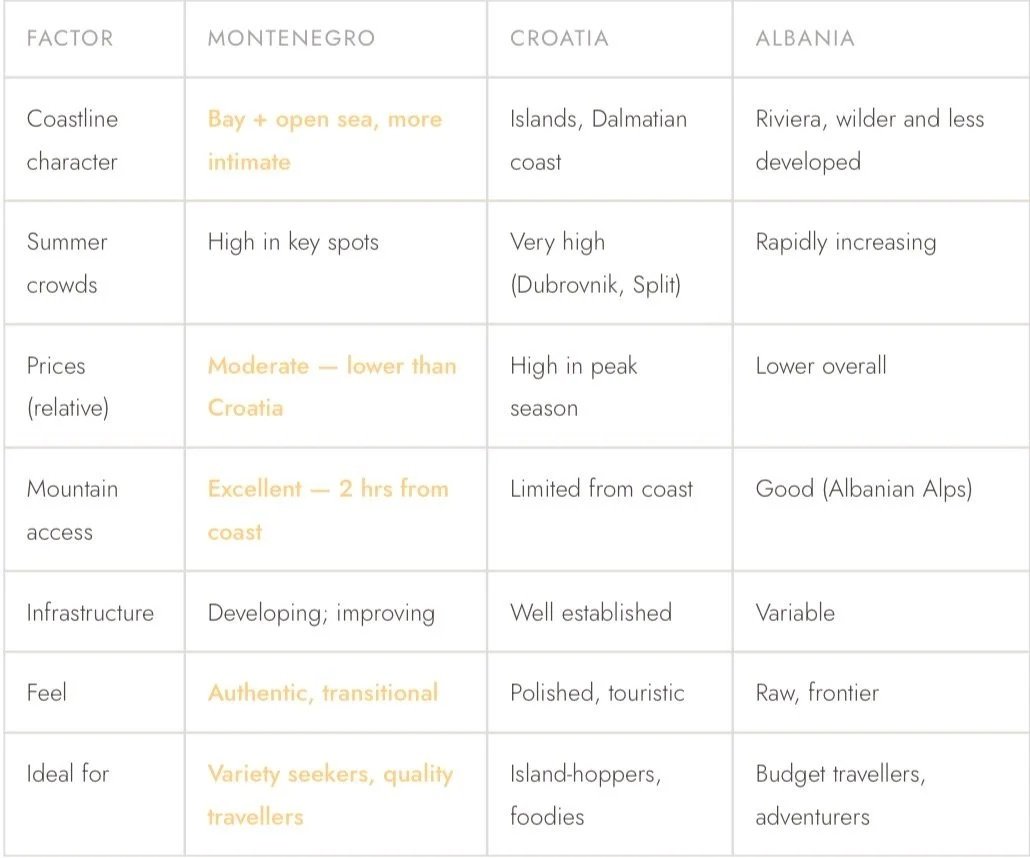
A comparison table of travel experiences in Montenegro, Croatia, and Albania highlighting differences in landscapes, infrastructure, prices, and overall travel style.
The honest summary: if you loved Dubrovnik but wished it felt less like a theme park, Montenegro's Bay of Kotor is a genuine alternative. If you are choosing between Croatia and Montenegro for a first Adriatic trip, Croatia offers a wider spread of islands and a more polished tourism infrastructure. Montenegro rewards travellers who want to go deeper into a single place.
Many travellers visit both on the same trip through curated Balkan tours.
Best Time to Visit Montenegro
When you visit has a greater impact on your experience than almost any other planning decision. Montenegro has a sharp seasonal personality.
SPRING :Apr – May
Quiet, green, cool. Ideal for inland travel. Some coastal businesses not yet open.
PEAK SUMMER : Jul – Aug
Busiest and most expensive. Coastal towns crowded. Book everything in advance.
EARLY SUMMER ★ BEST -June
Warm sea, low crowds, good prices. The sweet spot for coast + mountains.
AUTUMN ★ GOOD - Sep-Oct
Warm water, thinning crowds, harvest season. Excellent for wine and food travel.
Practical note: Kotor receives a disproportionate number of cruise ship visitors in summer. If the Old Town matters to you, mornings before 10am or evenings after 6pm offer a dramatically different experience to midday. Early June and late September remain our strongest recommendations for first-time visitors.
Reasons to visit
montenegro Coastline - it Changes Every Few Kilometres
Montenegro's Adriatic coastline is roughly 295 kilometres long but feels longer in character. The Bay of Kotor in the north is almost fjord-like: calm, enclosed, and cinematic, fishing villages like Perast sit on the waterfront with a stillness that feels almost unreal in July. Further south, near Budva, the energy shifts, beaches widen, restaurants spill across promenades, and the pace accelerates.
Beyond Budva, the coast opens further. Petrovac feels genuinely unhurried. Ulcinj, near the Albanian border, has long beaches and a distinct Ottoman heritage that feels unlike anywhere else in the country. The variety within a single coastline is one of Montenegro's most underrated qualities.
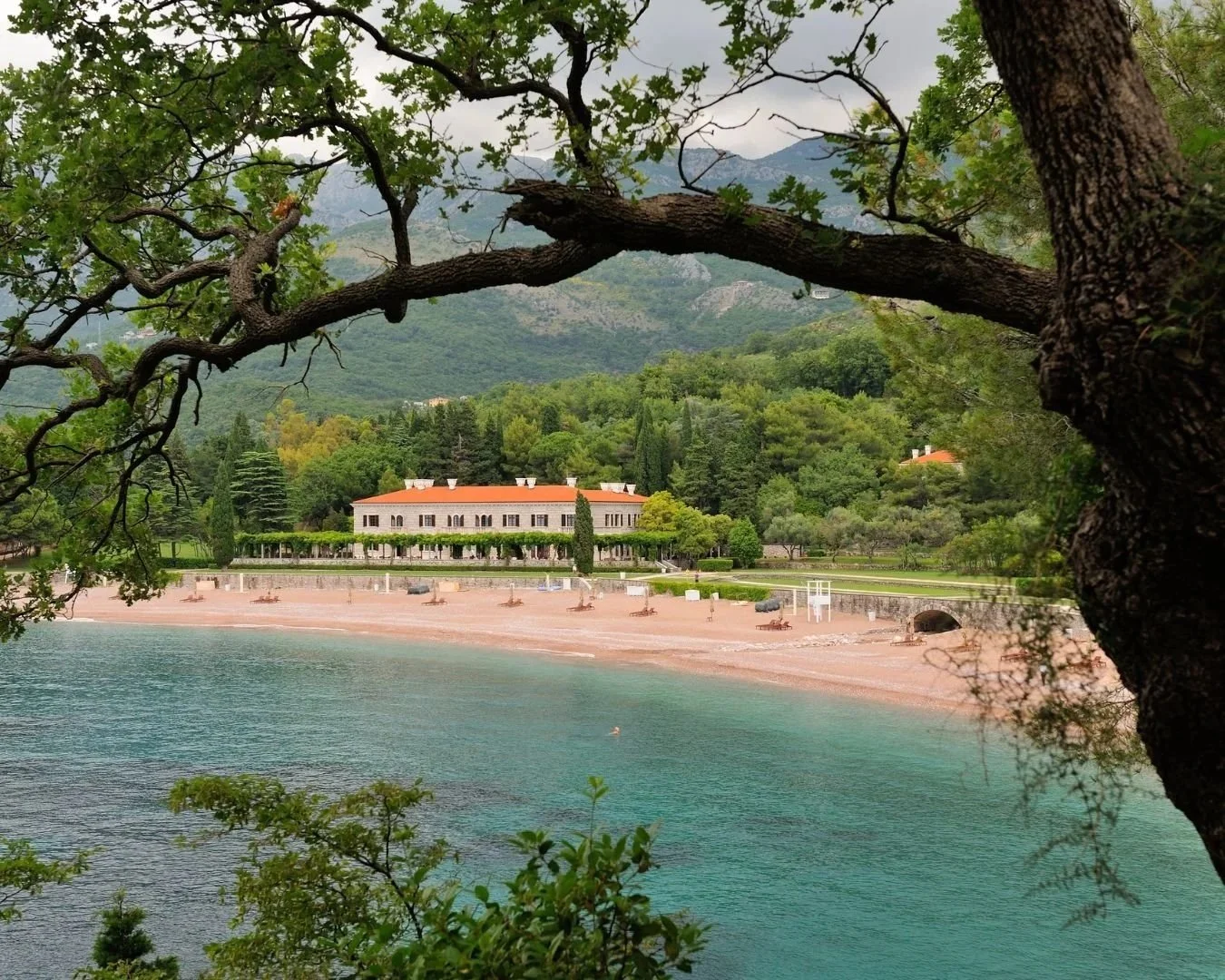
With its clear water and natural surroundings, Miločer Beach offers a quieter side of the Montenegrin coast.
Sea and Mountains in a Single Day
Few destinations make this combination so frictionless. The drive from Kotor Bay to the summit road above it, through 25 hairpin bends towards Lovćen National Park, takes roughly 45 minutes and delivers one of the most dramatic viewpoint shifts anywhere in southern Europe. The Bay unfolds below you, suddenly enormous, impossibly blue.
Further north, Durmitor National Park feels like an entirely different country. The air is cooler, the forests are dense, and the Black Lake sits at 1,416 metres with an alpine quietness increasingly rare in Europe. Accessing both regions in a single trip requires little more than a two-hour drive, and is best done with a private guide who can adjust the route as the day unfolds.
You can begin the morning beside the sea, spend the afternoon above the clouds, and end the evening back in a medieval town, all without the trip ever feeling rushed.
Medieval Towns That Still Feel Lived In
Kotor's Old Town is perhaps the most architecturally complete medieval settlement on the Adriatic, compact, walled, and genuinely inhabited. It is not a preserved museum; laundry still hangs between windows, cats still occupy the squares, and daily life continues inside buildings that predate most nations. Arriving before 9am changes everything, the streets are almost empty and the scale of the fortifications becomes properly visible.
Perast offers something different: a former sea-captain's town that carries its 18th-century prosperity quietly. There is very little to "do" there in a conventional tourist sense, which is precisely its value. You sit by the water, take a short boat ride to the island church, and stay longer than planned. It is a place that rewards unhurried travellers.
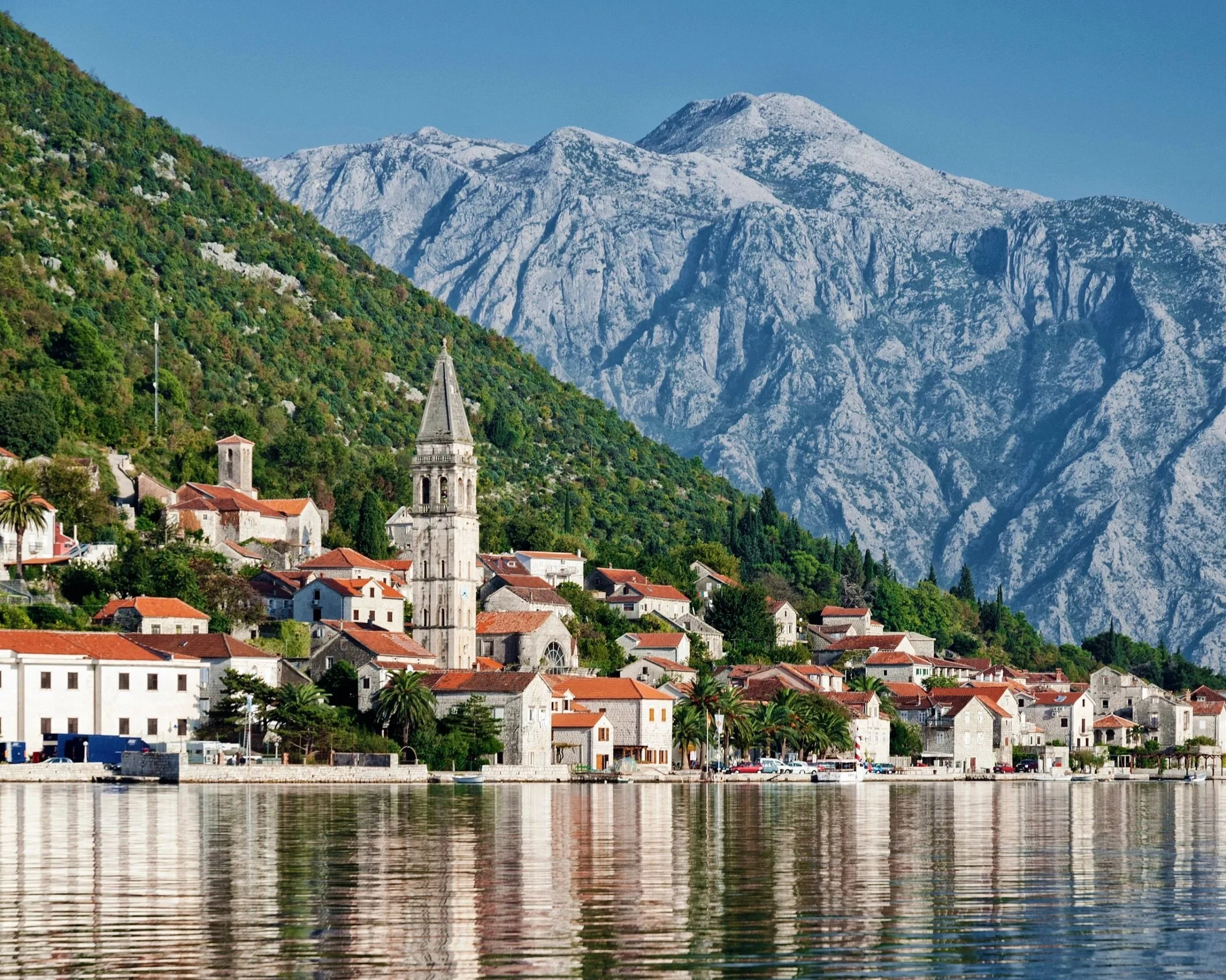
Perast is a small coastal town where stone houses and calm sea views create a quiet Adriatic atmosphere.
A Food Culture That Varies Meaningfully by Region
Montenegrin food is rarely discussed in the same way as, say, Italian or Greek cuisine, but it deserves more attention than it typically receives. The key is that it changes genuinely by region, not merely in terms of menu wording. Coastal towns around Kotor and Herceg Novi serve grilled fish, black risotto, and mussels cooked na buzaru (white wine, garlic, parsley) in a tradition shaped by centuries of Venetian influence. Inland, near Kolašin and the mountains, food shifts entirely: kačamak (a dense mix of potato, cornmeal, local cheese, and kajmak), smoked meats, and dishes cooked ispod sača, under a metal lid buried in hot coals, reflect a colder, more self-sufficient culinary history.
The wine region around Lake Skadar, producing the strong red Vranac grape, offers afternoon tastings in family-run cellars that have no online booking system and are none the worse for it. Food here is experienced rather than curated, and that distinction matters.
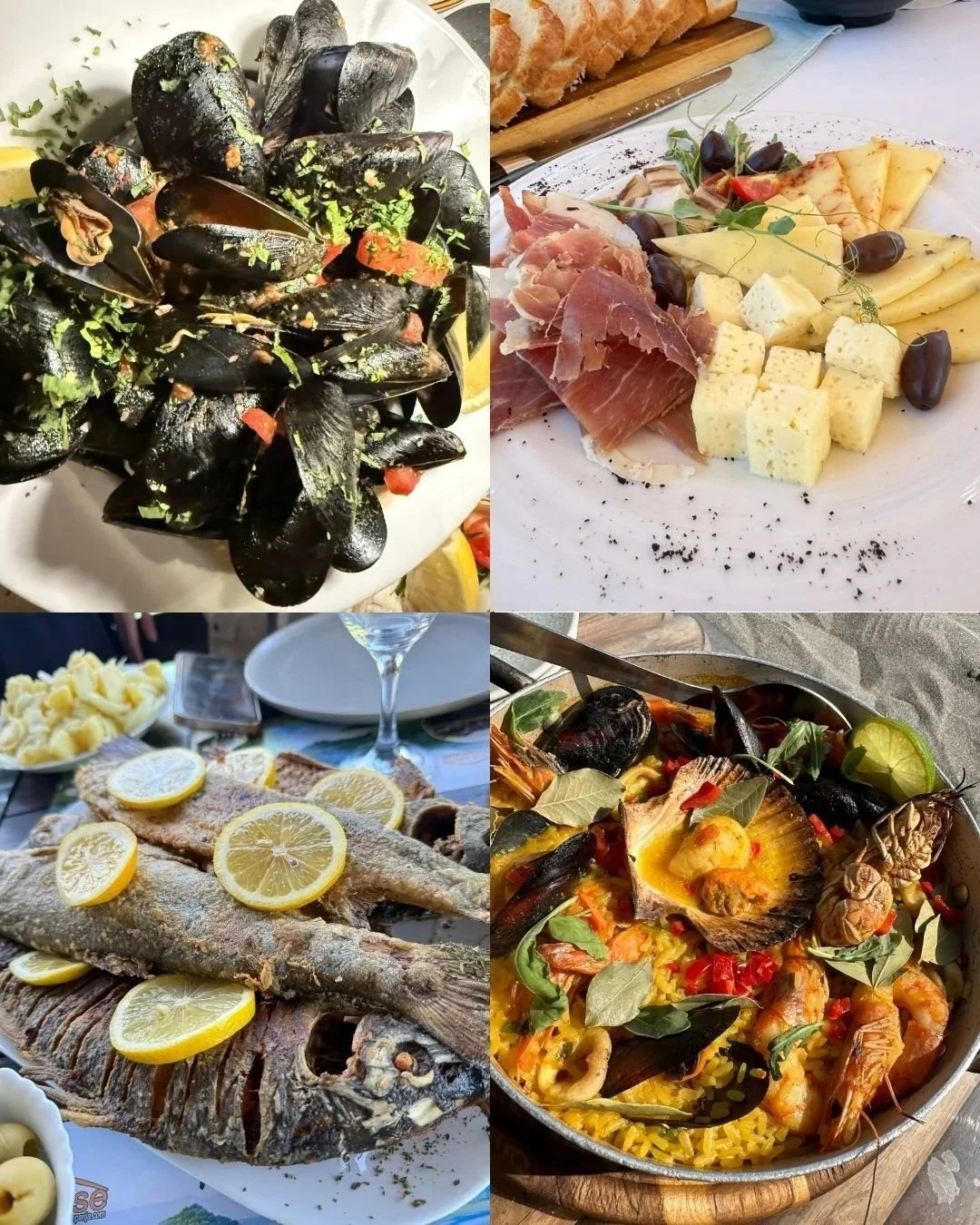
Some of Montenegro’s traditional and seafood specialties.
A Sense of Pace That Feels Genuinely Rare
This is harder to quantify but consistently appears in how travellers describe Montenegro. The country has not yet fully reorganised itself around the visitor experience. Cafés still fill with locals in the morning before tourists arrive. Small restaurants sometimes have no menu beyond what was caught or grown that day. Villages near Lake Skadar move at a pace shaped by the water and the light rather than a tourism schedule.
For travellers who arrive from busier, more polished destinations, this quality is often what stays with them longest.
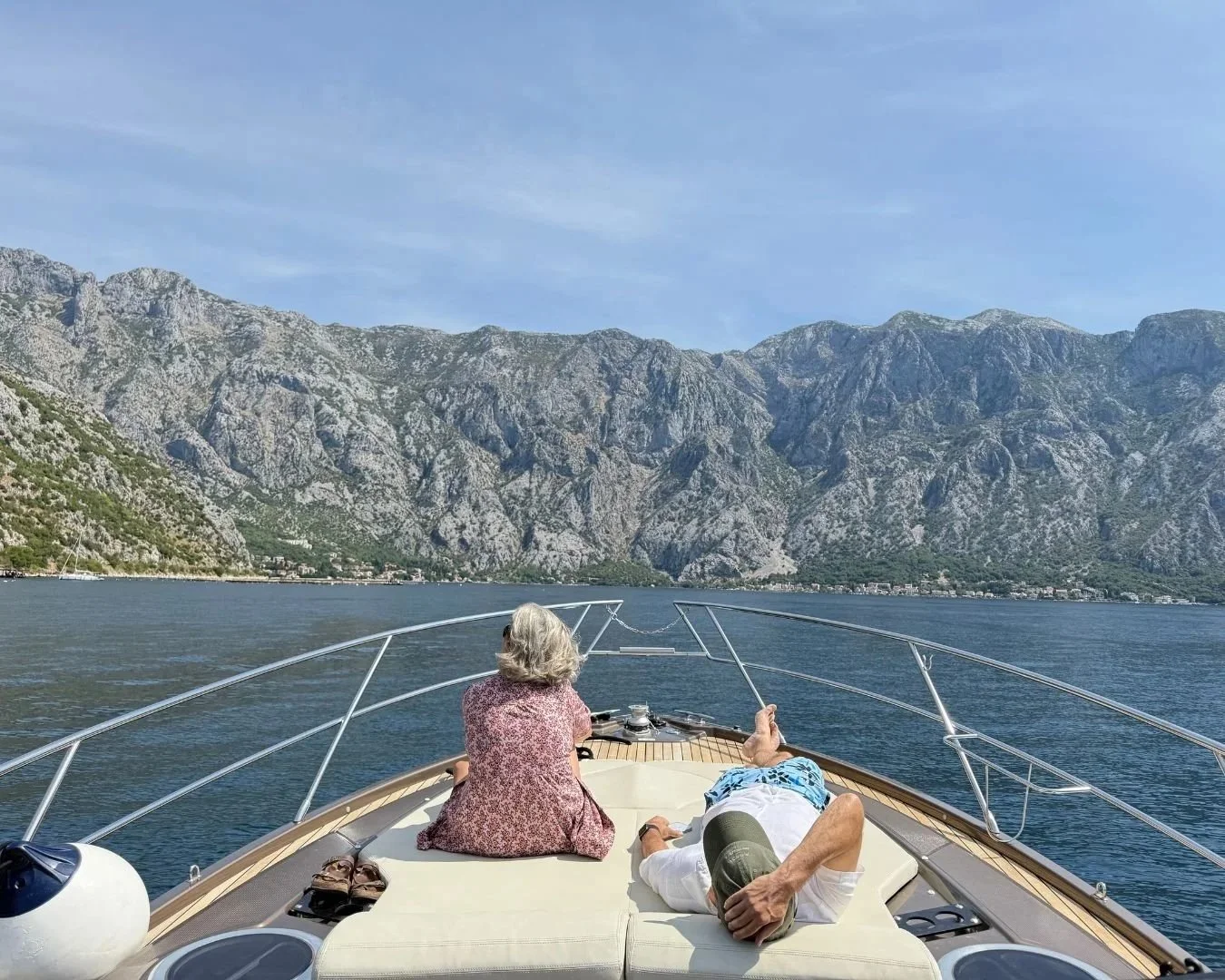
A couple enjoying a peaceful moment while overlooking the calm Adriatic Sea.
Honest drawbacks
Summer Traffic Is a Real Constraint
In July and August, the coastal road between Budva and Kotor, one of the most scenic drives in the Balkans, can become heavily congested. What looks like a 40-minute drive on a map routinely takes 90 minutes on a Sunday afternoon in August. Cruise ships docking in Kotor during peak hours can change the character of the Old Town dramatically and abruptly. This is not a minor footnote, it genuinely shapes the experience and is worth factoring into itinerary planning.
The practical workaround: move early. Sightseeing before 9am or after 5pm bypasses the majority of both coach traffic and cruise visitor patterns. Private transfers and pre-planned routes also help absorb uncertainty.
Bay of Kotor shore excursion visiting Perast and Kotor along Montenegro’s coastline.
Public Transport Is Limited Beyond Major Routes
Buses connect the main coastal towns reliably enough, but the system is built around commuter schedules rather than visitor flexibility. Reaching Durmitor, Lake Skadar's smaller villages, or any combination of coastal and inland sights in a single day is genuinely difficult without a private vehicle. The timetable structure, not the distance, is the limiting factor, Montenegro is compact, but its bus network does not reflect that compactness.
Renting a car is the most practical solution for independent travellers. For visitors who prefer not to drive, a private tour arrangement resolves most of these constraints and often allows for a more flexible day than self-driving would.
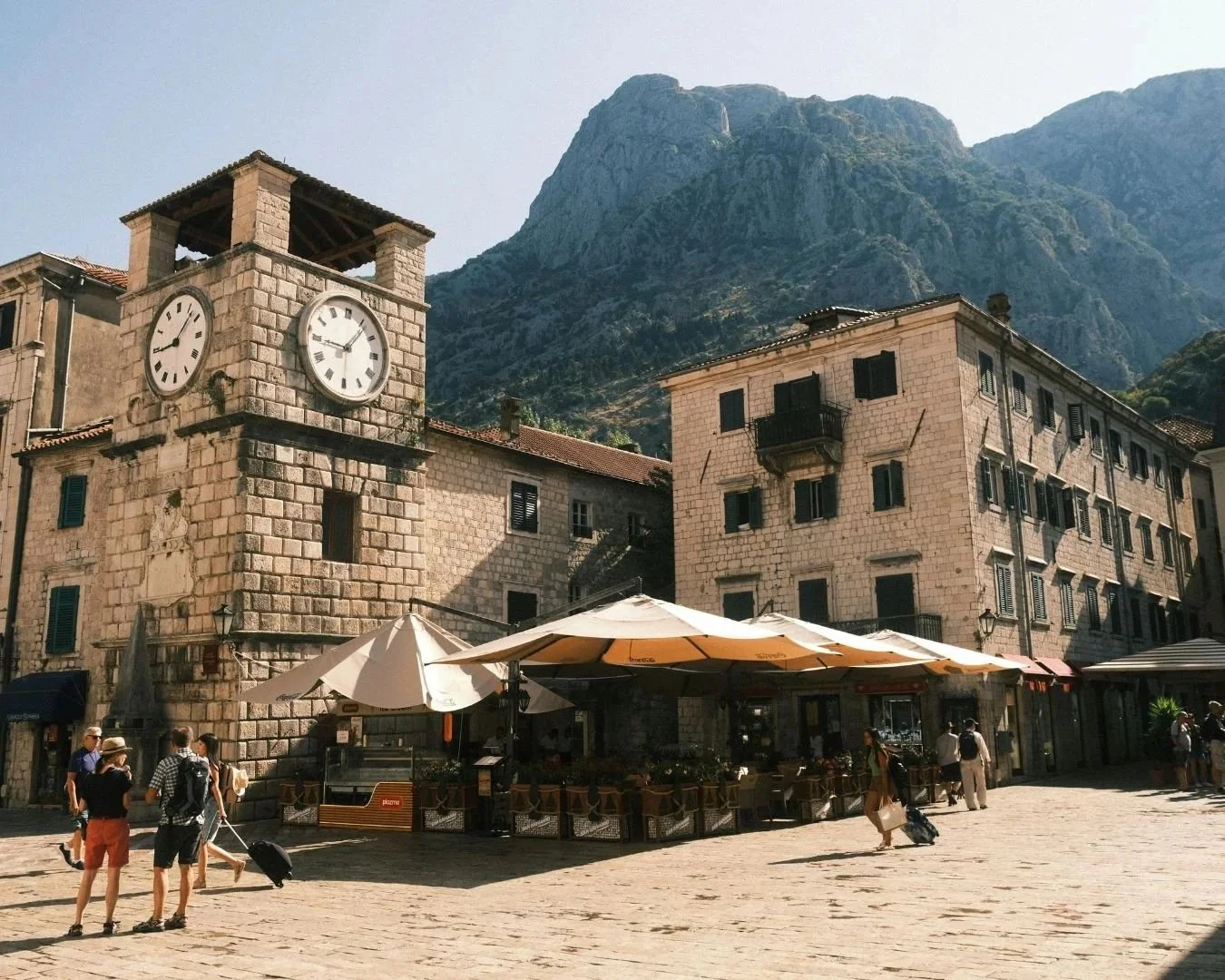
Kotor Old Town with its narrow stone streets and historic buildings surrounded by city walls and mountains.
Peak Season Prices Have Risen Sharply
Montenegro is no longer the budget destination it was a decade ago, at least not in July and August along the coast. Waterfront hotels in Kotor and Budva now command prices comparable to similar properties in Croatia. Boat excursions, sunset dinners on the Bay, and private experiences carry meaningful seasonal premiums. The same trip taken in June or September often costs 20-30% less with significantly fewer crowds.
Development Has Changed Parts of the Coastline
The stretch south of Budva has seen rapid residential and hotel development over the past decade. Some areas now feel more like continuous resort strips than individual coastal towns with distinct character. Tivat's Porto Montenegro is intentionally modern and works coherently on its own terms, but the broader pattern of overdevelopment in certain areas is worth knowing before you arrive. The further from the main coastal corridor you venture, and the earlier in the season, the less this becomes a factor.
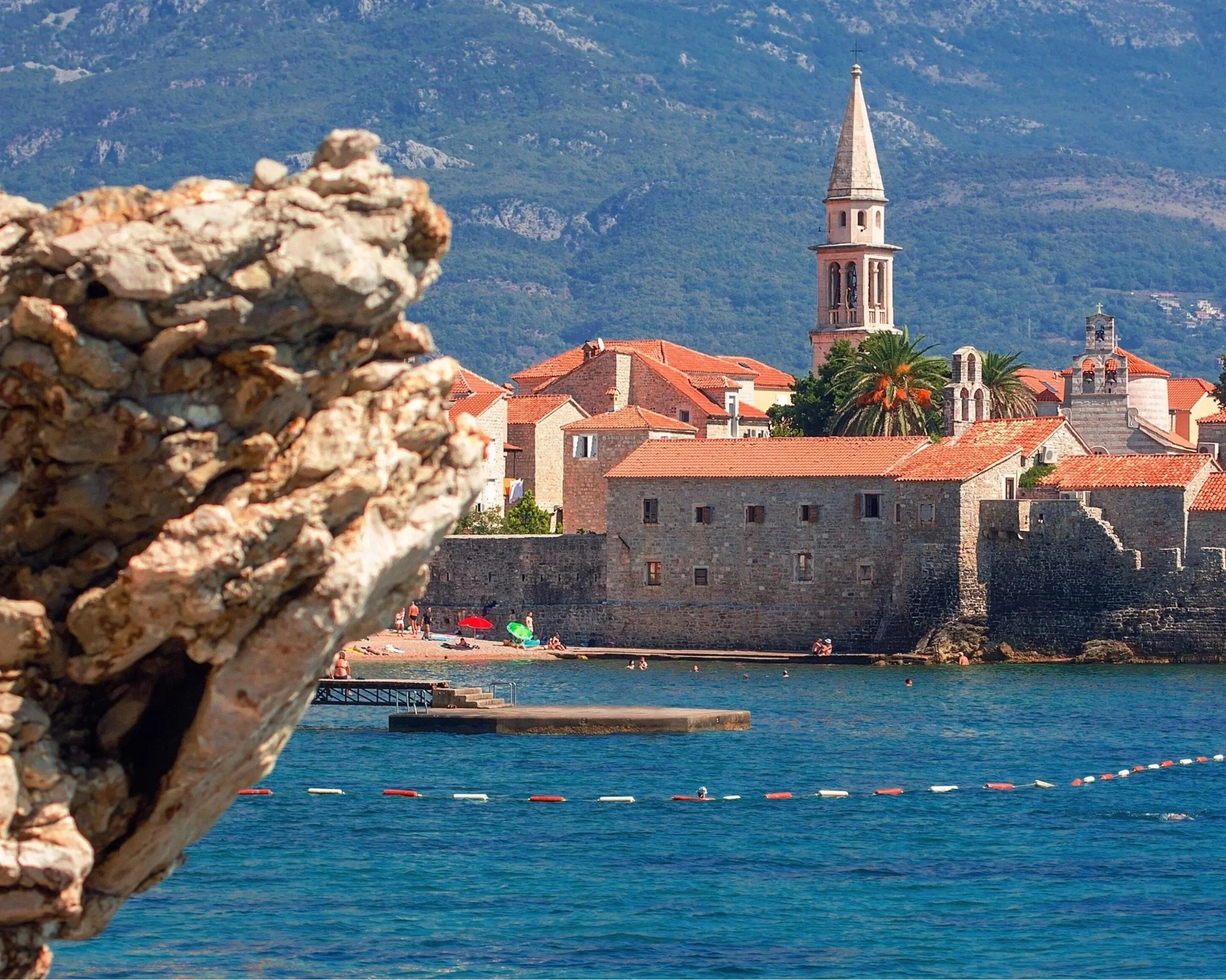
View of Budva Old Town by the Adriatic Sea.
If you are thinking how to spend your holiday - here you can find our multi-day tours from a weekend gettaway to a longer trip of 10+ days.
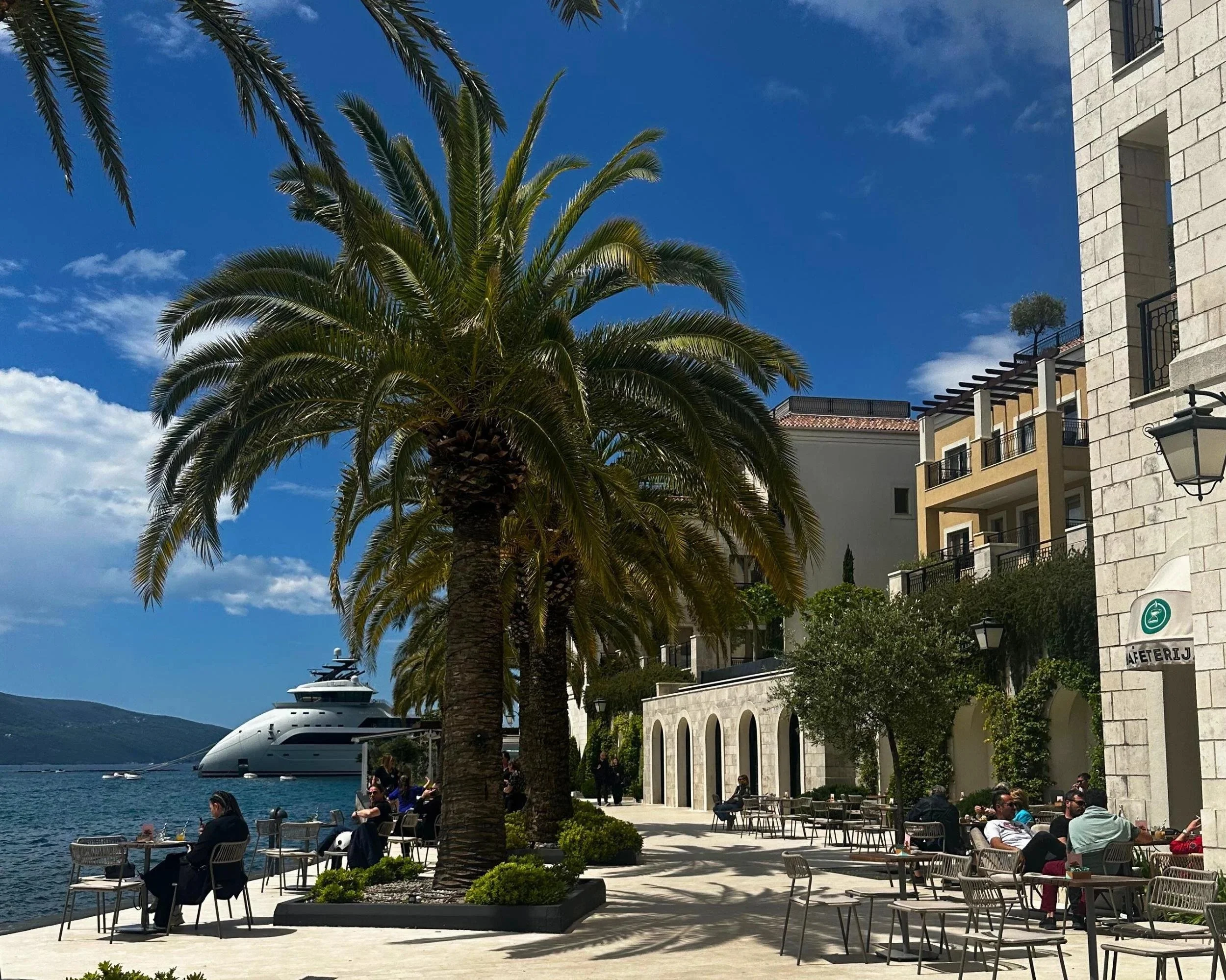
Tivat on the Adriatic coast of Montenegro.
Frequently Asked Questions
Is Montenegro safe for tourists?
Montenegro is generally considered safe for tourists, with low rates of violent crime. Standard travel precautions apply in busy coastal areas during summer. The country is politically stable and has been a NATO member since 2017.
Do I need a visa for Montenegro?
Citizens of the EU, US, UK, Australia, and Canada can enter visa-free for up to 90 days. Montenegro is not yet in the EU's Schengen Area, so time spent there does not count against your Schengen allowance, a practical advantage for travellers combining Montenegro with Croatia or other Schengen countries.
How many days do you need in Montenegro?
Five to seven days is the most common and well-suited duration for a first visit covering the coast, at least one inland region, and some flexibility. A weekend (2–3 days) works if you focus on the Bay of Kotor or Budva alone. Ten days allows proper exploration of the north, including Durmitor. See our multi-day itineraries here.
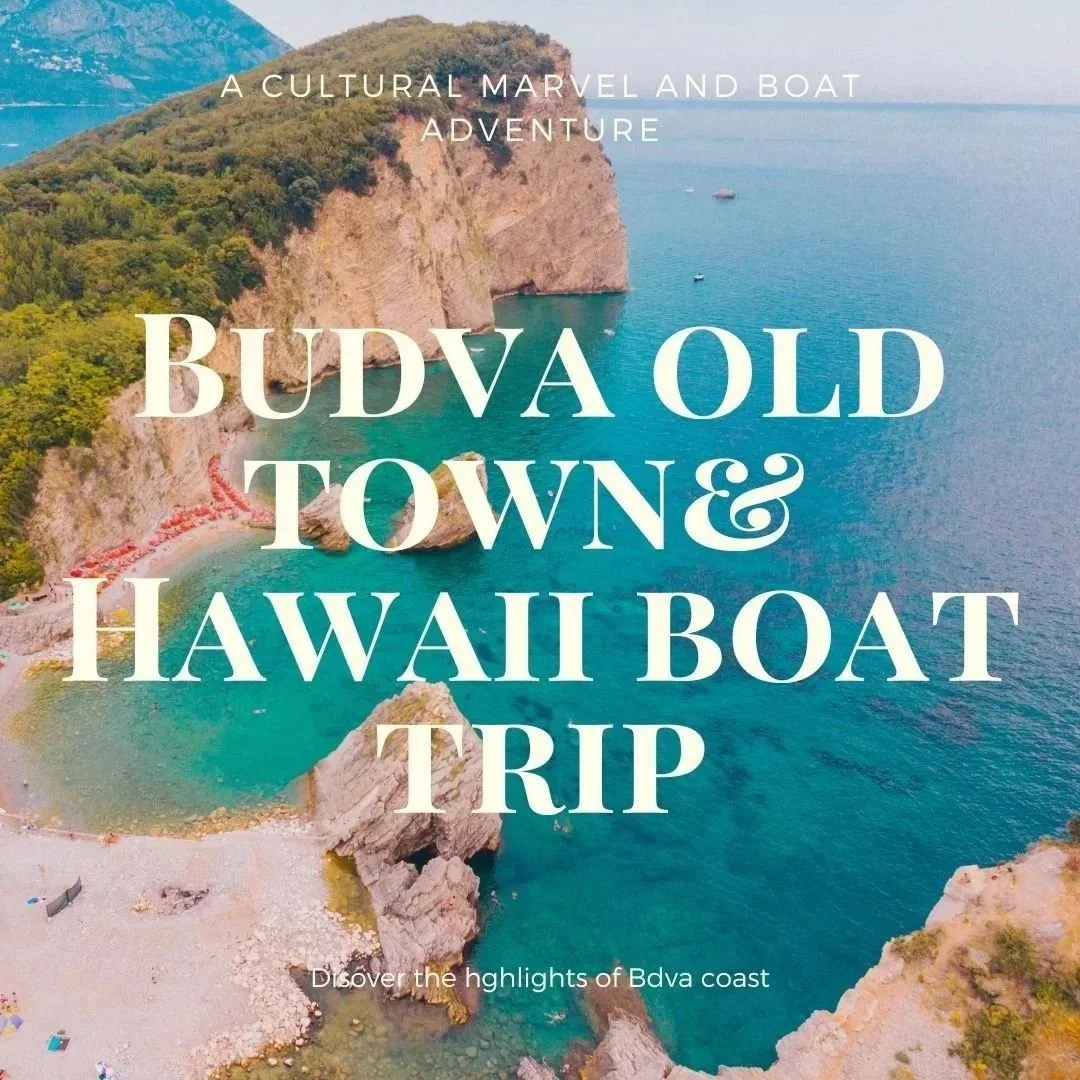
Budva Old Town and Hawaii boat trip exploring the Adriatic coast by land and sea.
Is Montenegro worth visiting compared to Croatia?
They serve different travel personalities. Croatia has a more developed tourism infrastructure and a wider spread of islands. Montenegro offers more variety within a compact area, a less polished but more authentic atmosphere in many places, and generally lower prices outside peak months. Many travellers visit both on the same trip, the border crossing between Dubrovnik and Kotor takes under two hours.
What is Montenegro known for?
Primarily the Bay of Kotor and its medieval towns (Kotor, Perast, Herceg Novi), the Adriatic coastline around Budva and the Budva Riviera, Durmitor National Park and the Tara Canyon in the north, and Lake Skadar in the south. The combination of these landscapes within such a small country is the country's defining characteristic.
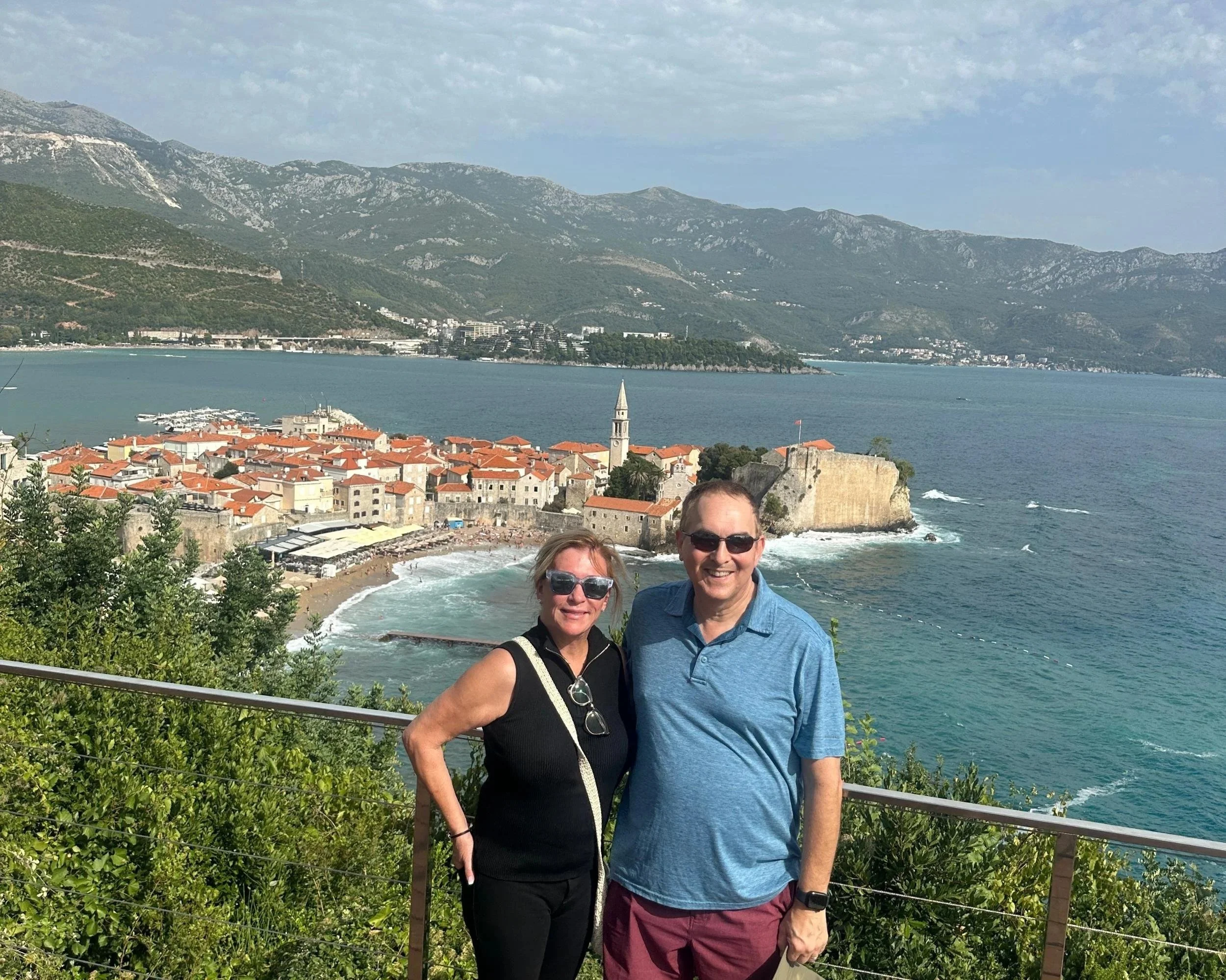
A couple enjoying time together in Budva.
Final Verdict
Montenegro is worth visiting, genuinely, not as a consolation prize for travellers who couldn't get into Croatia or who are looking for somewhere cheaper. Its particular value lies in compression: an unusual density of different landscapes, histories, and rhythms within a country small enough to navigate in a week without feeling rushed.
The challenges are real. Summer traffic along the Bay of Kotor, crowd pressure in Kotor and Budva during peak months, limited public transport beyond the main coastal route, and rising prices at waterfront hotels in July and August are not insignificant. They are manageable with good timing and a degree of flexibility, but they deserve honest acknowledgement rather than a reassuring footnote.
Travel in late May, June, or September if the calendar allows. Combine the coast with at least two nights inland. Move early in the day. Eat where the menus are short and the wine list consists of Vranac and few other grape varieties. Montenegro at its best is not polished, and that, more than any specific viewpoint or beach, is what tends to stay with people.